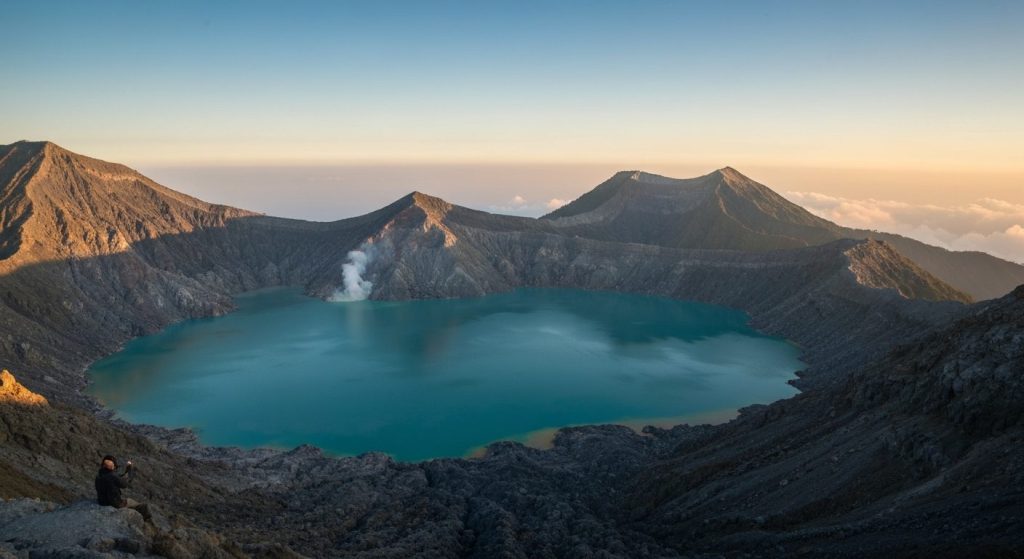
The `ijen crater lake tour from bali` is an unforgettable journey, and our 2-day, 1-night overnight option ensures you experience its wonders rested and ready. This private overnight Ijen tour from Bali offers a comfortable alternative to the grueling one-day round trip, allowing you to cross the ferry, relax in a proper Banyuwangi hotel, and then wake refreshed for the midnight hike to witness the electric-blue flames and the serene turquoise crater lake at sunrise.
As Ijen Tour from Bali Editorial Desk, Photography & Night-Sky Field Editor for Ijen Tour From Bali, I’ve made this trip more times than I can count. I’ve seen the blue fire flicker in the pre-dawn dark and watched the sun illuminate Kawah Ijen’s otherworldly landscape. I’m here to give you the honest truth about what to expect, how to prepare, and even how to capture those incredible moments with your camera. We, Bali Premium Trip, specialize in making this complex journey seamless, handling your transfers, licensed local guide, permits, and overnight ijen tour from bali hotel accommodation in Banyuwangi.
Why Choose the Overnight Ijen Tour from Bali? The Comfort-First Approach
Many visitors attempt the Ijen trip in a single, exhausting day from Bali. That means waking before midnight, traveling hours to Gilimanuk, taking the ferry, driving another hour or two to Paltuding, and immediately beginning a strenuous hike – all without real rest. It’s doable, but it’s a marathon, not a scenic walk.
Our `ijen 2 day 1 night tour from bali` prioritizes your comfort and experience. Instead of rushing, you travel at a reasonable pace on Day 1, checking into a vetted hotel in Banyuwangi, the closest town to Ijen. You get to rest, enjoy dinner, and truly prepare for the midnight ascent. This way, when you begin the trek to the blue fire, you’re not fighting fatigue; you’re simply marveling at the adventure. This `ijen crater overnight tour` setup means you enjoy the spectacle more and return to Bali feeling accomplished, not completely drained.
One-Day Rush vs. Two-Day Comfort: Your Ijen Choice
- One-Day Ijen Tour from Bali (Typical)
-
- **Departure Time:** Usually 7:00 PM – 9:00 PM from Bali.
- **Travel Pace:** Extremely fast-paced, often rushed.
- **Rest/Sleep:** Minimal to none, usually napping in the car or on the ferry.
- **Physical Demand:** Very high, as you’re hiking after a full night of travel.
- **Blue Fire View:** Possible, but fatigue can lessen enjoyment.
- **Crater Lake View:** Seen at sunrise, often with lingering exhaustion.
- **Return to Bali:** Arrive late afternoon/evening, very tired.
- **Hotel Stay:** No hotel included.
- Two-Day, One-Night Ijen Tour from Bali (Bali Premium Trip’s Overnight Option)
-
- **Departure Time:** Relaxed morning/early afternoon from Bali.
- **Travel Pace:** Comfortable, allowing for breaks.
- **Rest/Sleep:** Full night’s sleep in a Banyuwangi hotel.
- **Physical Demand:** Moderate, as you’re hiking after proper rest.
- **Blue Fire View:** Enhanced, as you’re more alert and present.
- **Crater Lake View:** Enjoyed fully, with energy to appreciate the surroundings.
- **Return to Bali:** Arrive mid-afternoon, feeling refreshed and accomplished.
- **Hotel Stay:** Quality hotel accommodation in Banyuwangi included.
Your Ijen Crater Lake Overnight Tour from Bali: What’s Included
When you book your `ijen crater lake from bali overnight` tour with Bali Premium Trip, you’re not just getting a ticket; you’re securing a meticulously planned private experience. We handle the logistics so you can focus on the adventure. Here’s what we include:
* **Private Round-Trip Transfers from Bali:** Comfortable, air-conditioned vehicle pick-up from your hotel anywhere in Bali (Ubud, Seminyak, Canggu, Kuta, Sanur, Denpasar, etc.) and drop-off back to your hotel.
* **Ferry Tickets:** All necessary passenger and vehicle ferry tickets between Gilimanuk (Bali) and Ketapang (Java). The ferry operates 24/7 and takes approximately 45-60 minutes for the crossing.
* **Accommodation in Banyuwangi:** One night’s stay in a vetted, clean, and comfortable hotel in Banyuwangi, chosen for its proximity to Ijen and quality of rest. This is your crucial rest stop before the midnight hike.
* **Private Transfers in Banyuwangi:** Dedicated vehicle transfer from your Banyuwangi hotel to Paltuding (Ijen base camp) and back.
* **Licensed Local Ijen Guide:** An experienced, knowledgeable, and licensed local guide will accompany you throughout the Ijen trek, providing insights, ensuring your safety, and navigating the trails. We arrange these guides through our trusted local partners who are fully licensed for park access.
* **Ijen Crater Entrance Fees & Permits:** All required entrance tickets and permits for Kawah Ijen National Park, pre-arranged for a smooth entry.
* **Gas Masks:** High-quality, properly fitted gas masks are provided and are essential for your safety, especially if you descend into the crater or if winds push sulfur gas onto the rim.
* **Bottled Water:** Ample bottled water to keep you hydrated during the journey and hike.
* **Breakfast:** A hearty breakfast at your Banyuwangi hotel after your return from the Ijen trek.
The Journey: Your 2 Days 1 Night Ijen Crater Itinerary
This `ijen blue fire 2 day tour from bali` is designed for a balance of adventure and recuperation. Here’s a step-by-step look at what your trip will entail:
Day 1: Bali Departure to Banyuwangi Relaxation
* **12:00 PM – 2:00 PM (Approximate): Bali Hotel Pick-up**
* Your private Bali Premium Trip driver will pick you up from your accommodation in Bali. The exact time depends on your location, but we aim for an early afternoon departure to ensure a relaxed pace.
* Enjoy the scenic drive across Bali to Gilimanuk Port, located on the western tip of the island.
* **4:00 PM – 5:00 PM (Approximate): Ferry Crossing to Java**
* Arrive at Gilimanuk Port. Your driver will assist with the ferry boarding process.
* The ferry ride across the Bali Strait to Ketapang Port in East Java typically takes 45-60 minutes. It’s a simple, calm crossing.
* **5:30 PM – 6:30 PM (Approximate): Transfer to Banyuwangi Hotel & Check-in**
* Upon arrival at Ketapang, your driver will take you directly to your pre-booked hotel in Banyuwangi.
* Check-in and settle into your room. This is your chance to unwind, have dinner (at your own expense – your guide can recommend local eateries), and get some much-needed rest. Remember, an early start awaits!
Day 2: Midnight Trek, Blue Fire, Sunrise Spectacle & Return to Bali
* **12:00 AM (Midnight): Wake-up Call & Departure to Paltuding**
* Your local Ijen guide and driver will meet you at your hotel.
* After a quick check of your gear, you’ll embark on a 1-1.5 hour drive to Paltuding, the official starting point for the Ijen trek.
* **1:30 AM – 2:00 AM: Arrive at Paltuding & Briefing**
* Reach Paltuding. Your guide will handle the park entry permits and provide a safety briefing, explaining the trail, what to expect, and how to use your gas mask.
* Ensure you have your headlamp or flashlight ready; it’s pitch dark.
* **2:00 AM – 3:30 AM: Ascent to the Crater Rim**
* Begin the 3-kilometer hike up to the Ijen crater rim. The trail is well-trodden but steep in parts, gaining approximately 450 meters in elevation. It typically takes 1.5 to 2 hours, depending on your fitness level.
* Walk steadily, taking breaks as needed. The cool night air is refreshing.
* **3:30 AM – 4:15 AM: Descent to the Blue Fire Viewpoint**
* From the rim, your guide will lead you on a further descent into the crater itself, a rocky, uneven path that takes about 30-45 minutes. This is where the gas masks become crucial due to the sulfur fumes.
* Witness the mesmerizing `ijen blue fire` phenomena. The flames are best seen between 1 AM and 4 AM, requiring near-total darkness for optimal visibility.
* **4:15 AM – 5:00 AM: Blue Fire Observation & Photography**
* Spend time observing the ethereal blue flames, a result of sulfuric gases igniting upon contact with air.
* This is the moment for those unique, long-exposure shots I’ll tell you about later.
* **5:00 AM – 5:30 AM: Ascent back to the Crater Rim**
* Begin the climb back up to the crater rim, a challenging but rewarding ascent.
* **5:30 AM – 6:30 AM: Sunrise & Crater Lake View**
* As dawn breaks, the world transforms. Watch the sunrise paint the sky with colors, revealing the `kawah ijen tour bali`’s most iconic feature: the vast, turquoise, acidic crater lake.
* The views from the rim are truly spectacular, offering panoramic perspectives of the lake, the surrounding peaks, and the active sulfur vents.
* **6:30 AM – 8:00 AM: Descent back to Paltuding**
* Begin the 3-kilometer descent back to Paltuding. The path that was dark hours ago is now illuminated, offering different views.
* **8:00 AM – 9:00 AM: Drive back to Banyuwangi Hotel & Breakfast**
* Meet your driver at Paltuding and drive back to your hotel in Banyuwangi.
* Enjoy a well-deserved breakfast at your hotel.
* **9:00 AM – 10:00 AM: Check-out & Depart for Ketapang Port**
* Check out from your hotel.
* Your driver will take you to Ketapang Port for your return ferry to Bali.
* **10:30 AM – 11:30 AM (Approximate): Ferry Crossing to Bali**
* Board the ferry back to Gilimanuk, Bali.
* **12:00 PM – 3:00 PM (Approximate): Return to Bali Hotel**
* From Gilimanuk, your Bali Premium Trip driver will transport you comfortably back to your hotel in Bali, arriving mid-afternoon.
This `ijen crater 2 day 1 night tour bali overnight` ensures you experience the full magic of Ijen without the rush.
Capturing the Magic: Photography Tips from Ijen Tour from Bali Editorial Desk
As someone who shoots the blue fire and the turquoise crater lake for a living, I can tell you that Ijen is a photographer’s dream. But it’s also challenging, especially in the near-total darkness. Here’s how to actually capture those moments.
Blue Fire Photography: Camera Settings for Near-Total Darkness
This is the trickiest part. The blue flames are dim, and you need to maximize your camera’s light-gathering ability.
* **Tripod is Non-Negotiable:** You absolutely need a stable tripod for long exposures. Handheld shots will be blurry.
* **Manual Mode (M):** Take full control.
* **Aperture (f-stop):** Use the widest aperture your lens allows (smallest f-number), typically f/2.8, f/4, or f/5.6. This lets in the most light.
* **ISO:** Start at ISO 1600 or 3200. You might even push it to ISO 6400 or higher if your camera handles noise well. Higher ISO means more noise, but you need the light.
* **Shutter Speed:** This is where the magic happens. Start with 15-30 seconds. Experiment! If your image is too dark, increase the shutter speed (e.g., from 15 to 20 seconds). If it’s overexposed, decrease it.
* **Manual Focus:** Autofocus will struggle in the dark. Switch your lens to manual focus (MF). Focus on infinity, or use your headlamp to illuminate a distant object briefly and manually focus, then switch the headlamp off.
* **Shoot in RAW:** This gives you maximum flexibility for editing and noise reduction later.
* **Remote Shutter Release or 2-Second Timer:** To avoid camera shake when pressing the shutter button.
* **Where to Stand:** Once you descend into the crater, your guide will lead you to safe spots. Be patient, respect the miners’ workspace, and find a stable position away from the main path. Look for angles where the flames are visible against the dark backdrop, perhaps with a miner in silhouette (ask permission first!).
Crater Lake Sunrise: Where to Stand on the Rim
After the blue fire, the sunrise is your next big photographic opportunity. The light changes rapidly, so be ready.
* **Best Spot on the Rim:** As you ascend back to the rim from the blue fire, keep an eye out for clear vantage points. Generally, the eastern side of the rim (where the sun will rise) offers the best panoramic views of the lake. Your guide will know the safest and most optimal spots.
* **Composition:** Frame the turquoise lake with the surrounding volcanic peaks. Look for leading lines in the landscape or interesting rock formations.
* **Filters:** A graduated neutral density (GND) filter can help balance the bright sky with the darker foreground. A polarizing filter can reduce glare on the water and deepen the blue/green hues of the lake.
* **Exposure Bracketing:** The dynamic range can be wide. Take multiple shots at different exposures (e.g., -2, 0, +2 EV) to combine later into an HDR image if needed.
* **Wait for the Light:** Don’t pack up too soon. The light quality changes dramatically in the 30-60 minutes after sunrise, often revealing new textures and colors in the landscape.
How to Photograph the Sulfur Miners Respectfully
The sulfur miners are the heart and soul of Ijen, working in incredibly harsh conditions. Respect is paramount.
* **Always Ask Permission:** Before raising your camera, make eye contact and ask for permission (a simple “Boleh foto?” – “May I take a photo?” – with a gesture to your camera usually works). If they decline, respect their wishes immediately.
* **Be Discreet:** Don’t shove a lens in their face. Use a telephoto lens if you want a closer shot from a distance.
* **Offer a Small Token (Optional):** Some travelers offer a small tip or a cigarette (if they smoke) as a gesture of appreciation after taking a photo. This is not mandatory, but it can be a kind gesture. Never make it a transaction for a photo; it should be a genuine thank you.
* **Capture Their Work, Not Just Their Faces:** Document their incredible strength, the heavy baskets of sulfur, the tools they use. These tell a powerful story.
* **Do Not Impede Their Work:** They are carrying immense loads. Always step aside and give them ample space on the narrow, steep paths. Do not block their way for a photo.
* **Avoid Sensationalism:** Aim to document their reality with dignity, not to create shock value.
Best Season and Weather Windows for Blue Flames
The best time for your `ijen blue fire 1 day tour from bali` (or two day!) is during the **dry season, which runs from April to October**.
* **Clearer Skies:** The dry season generally means less rain and clearer skies. This is crucial for both star-gazing during the night hike (if you’re lucky) and for unobstructed views of the sunrise and the crater lake.
* **Reduced Rain:** While Ijen can experience rain year-round, the dry season significantly reduces the chances of heavy downpours, which can make the trails slippery and impact visibility.
* **Blue Fire Visibility:** The blue flames are a chemical reaction, not dependent on weather, but they require **near-total darkness** for optimal viewing. Clear skies mean no cloud cover obscuring moonlight (which can be good or bad depending on your preference for stars/darkness) and generally better atmospheric conditions.
* **Avoid Peak Rainy Season:** December to February can bring heavy rains, making the hike more challenging and potentially obscuring views.
* **Wind Conditions:** Wind can significantly affect your experience. Strong winds on the rim can quickly blow sulfur gas towards you, making breathing difficult even with a mask. Always be prepared. Your guide will advise on conditions.
Ijen Hike Essentials: What to Bring and What to Expect
Preparation is key for this `kawah ijen tour bali` adventure. The environment is rugged, and the hike is challenging.
Packing List: What to Bring
* **Warm Layers:** It gets very cold at the crater rim (temperatures can drop to 5-10°C / 40-50°F or even lower). Bring a base layer, fleece or sweater, and a windproof/waterproof jacket. Gloves and a beanie are highly recommended.
* **Comfortable Hiking Shoes:** Sturdy, closed-toe hiking boots with good ankle support and grip are essential for the uneven, rocky terrain.
* **Headlamp or Flashlight:** Mandatory for the pre-dawn hike. Your guide will likely have one, but having your own is always a good idea.
* **Small Backpack:** For water, snacks, extra layers, and your camera gear.
* **Personal Medications:** If you have any specific medical needs.
* **Sun Protection:** Hat, sunglasses, and sunscreen for the descent when the sun is up.
* **Snacks:** Energy bars, fruit, or other small snacks for the hike.
* **Camera Gear:** Don’t forget your camera, spare batteries (cold drains them faster), and a tripod for blue fire photos!
* **Small Cash (IDR):** For any personal purchases, snacks, or to offer a small thank you to miners (optional).
Fitness Level Required
The `ijen crater lake tour with accommodation` involves a moderate to strenuous hike.
* **Uphill Ascent:** The 3 km climb to the rim is consistently uphill, with an elevation gain of around 450 meters. It’s not technical, but it requires stamina.
* **Descent into Crater:** The path down into the crater to see the blue fire is steep, rocky, and uneven. It can be slippery, especially in the dark. Good balance and careful footing are necessary.
* **Total Distance:** The round trip is approximately 6 km.
* **Pace:** Your local guide will adjust the pace to your group’s fitness level, taking breaks as needed. However, a basic level of fitness and stamina is important to enjoy the experience. If you can comfortably walk for 2-3 hours on an incline, you should be fine.
Safety: Gas Masks, Sulfur Gas, and General Health
Your safety is our priority at Bali Premium Trip, and our local partners are well-versed in Ijen’s conditions.
* **Gas Masks:** Gas masks are provided and are absolutely mandatory for descending into the crater. They are also highly recommended when on the rim, especially if the wind shifts and blows sulfur gas your way. The sulfur fumes contain hydrogen sulfide and sulfur dioxide, which can cause respiratory irritation, coughing, and eye irritation.
* **Sulfur Gas Exposure:** While the masks offer protection, brief exposure to low levels of sulfur gas is common. If you have **respiratory conditions (like asthma), heart conditions, or are pregnant, it is crucial to consult your doctor before planning this trip.** This is general safety information, not medical advice.
* **Altitude Sickness:** While Ijen’s elevation (2,799 meters / 9,183 feet) is not extremely high, some individuals might experience mild symptoms of altitude sickness like headache or dizziness. Staying hydrated helps.
* **Guide’s Instructions:** Always follow your licensed local guide’s instructions. They are experienced with the mountain’s conditions and are there to keep you safe.
* **First Aid:** Your guide will carry a basic first-aid kit, but it’s wise to bring any personal medications you might need.
Understanding the Ijen Crater Environment
Kawah Ijen is more than just a beautiful sight; it’s a living, working volcano with a unique ecosystem.
The Reality of Sulfur Mining
The sulfur miners at Kawah Ijen endure some of the harshest working conditions imaginable. They extract solidified sulfur manually from inside the crater, often near toxic fumes, and then carry loads of 70-90 kg (150-200 lbs) in baskets up to the rim and down the mountain. Their daily routine is physically brutal and incredibly dangerous. Witnessing their work firsthand is a humbling experience, and it’s why respectful interaction and photography are so important. They are not a tourist attraction; they are people working to support their families.
The Lake’s Acidity
The turquoise crater lake is the largest highly acidic lake in the world. Its pH level is typically below 0.5 – comparable to battery acid. This makes direct contact extremely dangerous. The lake’s striking color comes from the high concentration of sulfur and other dissolved minerals. It’s a reminder of the powerful geological forces at play here.
Environmental Considerations
As visitors, we have a responsibility to minimize our impact. Stay on marked trails, do not litter, and respect the natural environment. The local guides and park authorities work to manage tourism sustainably, and your cooperation helps preserve this extraordinary place.
Booking Your Private Overnight Ijen Tour from Bali
Ready to experience the `ijen tour with hotel accommodation banyuwangi` for yourself? Bali Premium Trip makes planning and booking straightforward. We operate our transfers and arrange all necessary third-party services like licensed local guides, park permits, and hotel accommodation through our vetted partners.
You can book this comprehensive private overnight Ijen tour from Bali directly with our own Bali Premium Trip reservations team. We offer transparent, published rates with no third-party markups.
**Indicative Pricing:** For a private `ijen crater lake tour with accommodation` (2 days, 1 night) from Bali, prices typically range from **US$250 – US$450 per person**. This range is indicative and can vary based on your specific Bali pick-up location, chosen hotel standard in Banyuwangi, and the number of participants in your private group (larger groups often have a lower per-person cost). Prices were last verified June 2026.
**To get a precise quote and plan your trip, reach out to us:**
Plan Your Trip
You can also contact our reservations team directly via WhatsApp at +6281128590000 or email us at [email protected]. Our team is ready to answer your questions and customize your Ijen adventure.
Frequently Asked Questions
Is the Ijen hike difficult?
The Ijen hike is considered moderately to strenuously difficult, primarily due to its consistent uphill climb of 3 kilometers (with approximately 450 meters elevation gain) to the crater rim, followed by a steep, rocky descent into the crater itself for the blue fire. While not technical, it requires good physical stamina. The dark conditions and sulfur fumes add to the challenge. Our 2-day, 1-night tour allows you to tackle it after a good night’s rest, making it more manageable than the one-day rush.
Do I need a gas mask?
Yes, gas masks are essential and mandatory, especially if you plan to descend into the crater to see the blue flames up close. Sulfur gases (hydrogen sulfide and sulfur dioxide) are present in high concentrations, which can cause severe respiratory irritation and eye discomfort. Even on the crater rim, if winds shift, masks are highly recommended for your safety. Bali Premium Trip provides high-quality gas masks as part of your tour.
What about the ferry crossing from Bali to Java?
The ferry crossing from Gilimanuk (Bali) to Ketapang (Java) is straightforward and comfortable. Ferries operate 24/7, and the journey typically takes 45-60 minutes. Your private driver will handle all tickets and logistics, ensuring a smooth transition between islands. It’s a simple, short sea voyage with multiple ferries running regularly.
Can children join the Ijen tour?
The Ijen tour, particularly the midnight hike to the blue fire and the descent into the crater, is physically demanding and involves exposure to sulfur fumes. While older, fit teenagers might manage, it is generally not recommended for young children or those with limited stamina. There are also inherent safety risks associated with the steep, uneven trails in the dark and