For Photographers
Ijen Blue Fire & Crater Photography Tour — Night Flames & Sulfur-Miner Portraits
A night hike to Kawah Ijen engineered around your camera: timed for the blue flames, crater-rim sunrise and sulfur miners, with guides who know the best angles. This page lays out exactly how we run a private photography tour from Bali or Banyuwangi, so you can decide if it fits your level, gear and schedule.
What This Trip Actually Is
This is not just "joining an Ijen hike and hoping for a few snaps". It is a guided blue fire night photography tour where the whole schedule is reversed out of your preferred shooting window.
Key Facts
Key Facts at a Glance
- Tour type
- Private Ijen photography tour from Bali or Banyuwangi (no mixed open-trip groups)
- Typical duration
- 1 night from Banyuwangi, or 2–3 days from Bali including transfers
- Hike distance & elevation
- ~3 km up from the trailhead to crater rim (~600 m elevation gain), plus optional ~700–800 m descent into the crater
- Designed for
- Photographers who want the tour built around light and angles, not only "sunrise at the top"
- Not ideal for
- Anyone with serious heart, lung or mobility issues. Sulfur gas and a sustained climb are non-negotiable.
- Best nights
- A moonless or low-moon night. Bright full moons wash out the flames in long exposures.
Inclusions
What’s Included, What’s Not
Bali Premium Trip handles your tour directly via our own reservations team. We do not add hidden third-party markups; you see the full package price before committing, and we arrange on-ground services via licensed local partners.
Typical Inclusions
- Private transfers Private, air-conditioned car transfers — Bali–Gilimanuk–Banyuwangi–Ijen–Banyuwangi–Bali, or ex-Banyuwangi as requested.
- Ferry tickets Between Bali and Java on public boats.
- Accommodation One night in Banyuwangi (for Bali-start trips), in your chosen comfort range.
- Park fees Park entrance fees and mandatory local guiding fees as required by the authorities.
- Licensed guide A local mountain guide familiar with photography priorities.
- Gas mask Gas mask rental via licensed operators.
Common Exclusions
- Flights & trains International and domestic travel to reach Bali or Banyuwangi.
- Travel insurance Highly recommended for this kind of trip.
- Photography gear Camera, tripod, warm clothing and headlamp are yours to bring.
- Tips For guides, drivers and miners — entirely at your discretion.
- Add-on tours Optional extensions to Bromo, Tumpak Sewu or elsewhere in East Java.
We do not provide cameras or tripods. If you share your kit list in advance, we can suggest what to prioritize and what to leave at the hotel to avoid overpacking on the hike.
Sample Itinerary
A Photographer-Focused Night, Hour by Hour
Here is a concrete example of how a private photography tour from Bali often runs if you choose 2 days / 1 night with a Banyuwangi hotel.
-
13:00 – 15:00
Pickup from Your Bali Hotel
In a private car from your Bali hotel or villa. Pickup areas: Seminyak, Canggu, Kuta, Jimbaran, Sanur, Nusa Dua, Uluwatu, Ubud — other areas on request.
-
Afternoon
Drive Across West Bali
Toward Gilimanuk port, with a short rest and early dinner on route. The drive is about 3.5–5 hours depending on traffic and starting point.
-
Evening
Ferry to Java, Then Banyuwangi
Cross by public RoRo ferry (~1 hour crossing, plus waiting and docking time), then continue by car to your Banyuwangi hotel.
-
21:00 – 22:00
Check-In & Final Briefing
Briefing about the hike, tripod strategy and current crater access rules. Sleep as early as you can.
-
23:30 – 00:30
Hotel Pickup in Banyuwangi
Drive about 1.5 hours to the Paltuding trailhead.
-
~01:00 – 01:30
Arrive at Paltuding
Gear check, gas mask fit, quick snack.
-
01:30 – 03:00
The 3 km Climb to the Rim
With a guide who keeps an eye on your pace and photo stops.
-
03:00+
Descend to the Blue Fire Viewpoints
If crater access is cleared by rangers and gas direction is safe, descend with your guide.
-
~03:30 – 04:30
Blue Fire Photography Session
Long exposures of the flames and the miner activity nearby, always adjusting for gas and crowd flow.
-
~04:30 – 05:00
Climb Back to the Rim
Before sky brightness washes out the flames entirely.
-
First light
Crater Lake & Miners at Sunrise
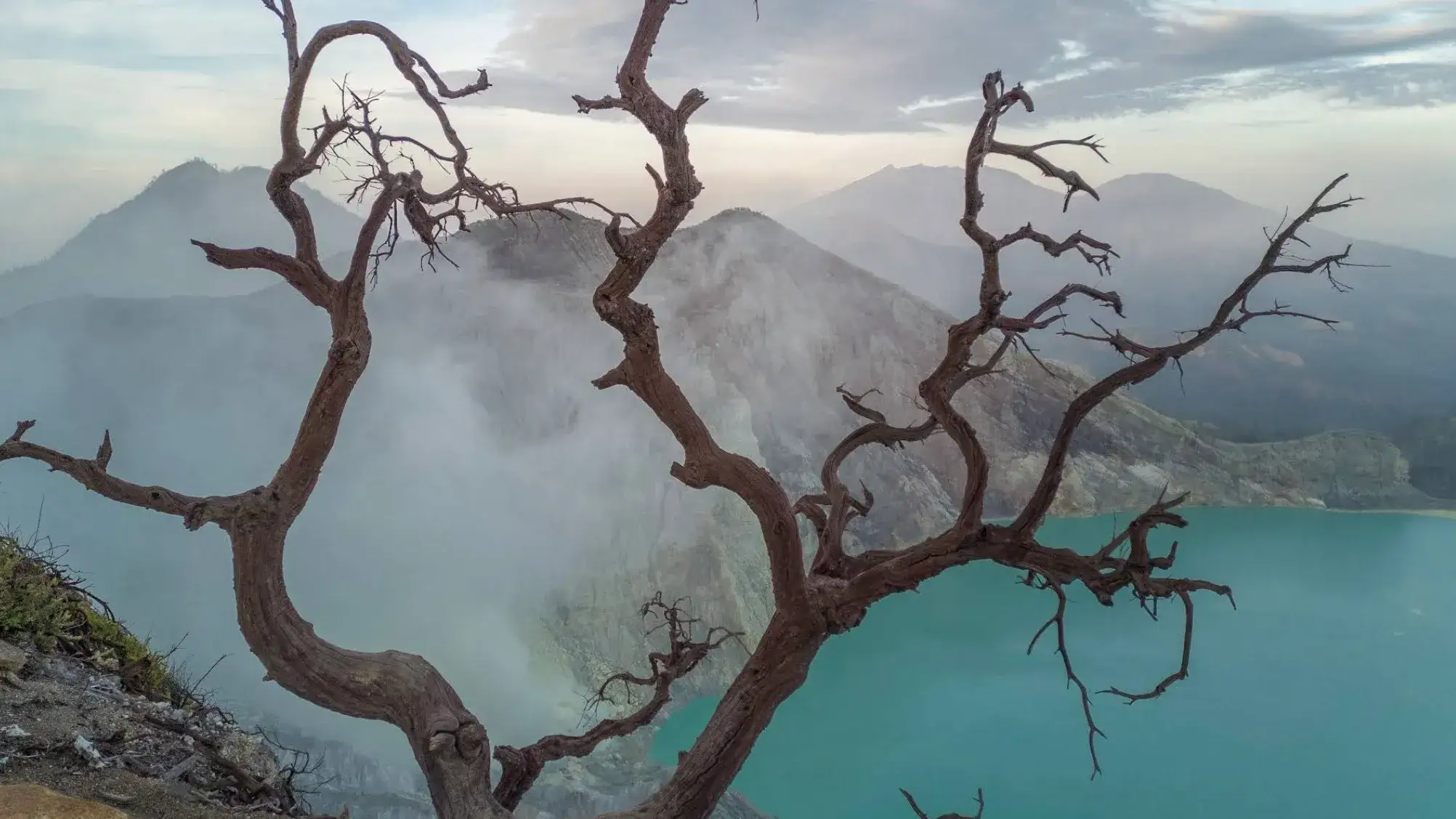
Wide panoramic frames of the whole crater, lake and plume; side-light on the ridges; minimalist shots with just rock, water and a single human figure.
Visibility changes minute by minute with gas and wind. There are also nights when rangers close the descent or ask everyone to stay on the rim. On those nights, blue fire is either distant or not visible at all — this is outside any operator’s control, and we will always be clear about that.
Camera Settings
Suggested Ijen Blue Fire Camera Settings
This will vary by gear and conditions, but as a starting point near the flames.
Mode
Manual. In light this low, nothing automatic will make a sensible decision for you.
MAperture
As wide as your glass allows. Full-frame sensors handle the low light best, but APS-C or Micro Four Thirds can still work well with careful exposure.
f/1.4 – f/2.8Shutter
Shorter if you want more defined flames, longer for a smoother, ghostly effect.
~2 – 15 secondsISO
A base range; on older cameras you may have to push it higher.
ISO 800 – 3200White balance
Start cool and adjust to taste in RAW.
3500 – 4000KTripod
Absolutely essential for night long exposures. Bring something stable but not too heavy — you will carry it up 600 m of climb.
Non-negotiableAs light comes up
Switch gradually from long exposures to more standard shutter speeds for people, keep ISO down once the sun is above the horizon, and stop down for sharp landscapes of the crater and ridges.
1/60 – 1/250 · ISO 100–400 · f/8–f/11If you tell us your level in advance, we can plan for either more patient composition time, or a quicker rhythm with broader coverage spots.
Why Private
Why Book a Photography-Focused Private Tour Instead of a Regular Open Trip?
| Aspect | Standard Open Trip | Bali Premium Trip Photography Tour |
|---|---|---|
| Group size | Larger mixed groups, 10–25+ people | Private, usually 1–8 photographers per guide |
| Departure timing | Fixed, set by the operator’s round | Set backward from moonset, ferry windows and your shooting window |
| Viewpoints | Wherever the crowd stops | Positioned at the best viewpoints by a guide who knows the angles |
| Pace on the trail | Group average; little time to set up | Time to set up tripods, adjust settings and try multiple compositions |
| Tripod space | Whatever is left in the main line of visitors | Guide helps you find stable, low-traffic ground away from the brightest lamps |
| Miner portraits | Rushed, no translation help | Guide helps you ask properly, in Bahasa Indonesia or Javanese |
If rangers close access to the crater or part of the rim for safety, we comply immediately. We will not take you into restricted zones for the sake of a "better shot".
FAQ
FAQs — Ijen Blue Fire & Photography
Is the blue fire guaranteed on this tour?
Can I join if I’m a beginner photographer with just a phone?
Do you provide cameras or tripods?
Is it safe to bring expensive gear near the sulfur?
How far in advance should I book an Ijen blue fire night photography tour?
Should I start from Banyuwangi or Bondowoso?
Keep Exploring
Other Ways to See Kawah Ijen
Crater Lake Overnight Tour
Two days, one night, with a proper Banyuwangi hotel before the midnight trek.
Ijen + Bromo Tour from Bali
Two volcanoes, one East Java journey — blue fire and the Bromo sunrise caldera.
Ijen + Bromo + Tumpak Sewu
The full East Java circuit, adding the "Niagara of Java" over 3–4 days.
From Banyuwangi, Bondowoso & Surabaya
Every East Java entry point compared, plus the Ketapang ferry gateway.
Ijen Tour Price & Cost
What drives the price up or down, and what every package actually covers.
How to Get from Bali to Ijen
The Ketapang ferry route, travel times and the midnight departure logic.
Indicative Pricing
Get a Quote for Your Shooting Dates
Ex-Banyuwangi night photography tour (no hotel): around US$150–220 per person for 2–4 guests. Ex-Banyuwangi with hotel: around US$170–260 per person. 2D/1N ex-Bali with a Banyuwangi hotel: around US$240–420 per person. All figures are indicative ranges only, last verified June 2026.
Larger private groups often benefit from per-person price reductions. Solo photographers can also book, though the per-person cost is naturally higher because vehicle and guide costs are not shared.