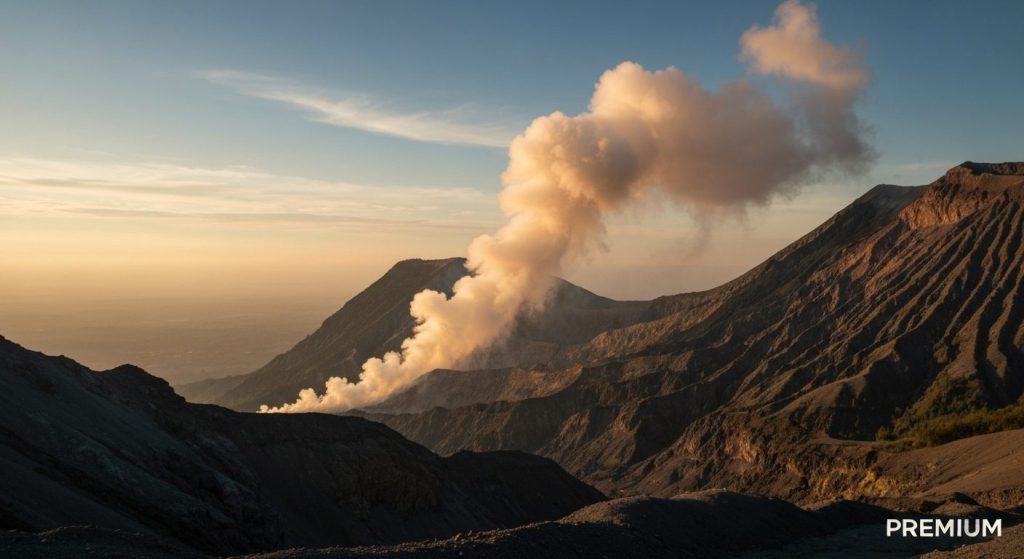
The `ijen blue fire tour from bali` is your direct path to witnessing one of Earth’s most surreal nocturnal spectacles: the electric-blue sulfuric flames of Kawah Ijen. This comprehensive guide, from someone who’s spent countless nights on that mountain, lays out exactly what to expect on your midnight guided hike to the blue fire and the turquoise crater lake, all seamlessly arranged by Bali Premium Trip.
I’m Ijen Tour from Bali Editorial Desk, the Photography & Night-Sky Field Editor for Ijen Tour From Bali. My job is to capture the raw beauty of this place – from the ethereal blue fire to the otherworldly crater lake at sunrise. I’ve trekked that path in every condition imaginable, and I’m here to give you the candid truth about this unforgettable adventure.
The Kawah Ijen Blue Fire Experience — What It Is & Why It’s Special
Kawah Ijen isn’t just a volcano; it’s a living, breathing geological wonder in the Banyuwangi Regency of East Java. Its most famous draw is the “blue fire,” a phenomenon so rare and captivating, it feels like it belongs on another planet. This isn’t lava burning blue; it’s the combustion of sulfuric gases that emerge from cracks in the volcano at high pressure and temperatures up to 600°C (1,112°F). When these gases ignite upon contact with air, they produce brilliant, electric-blue flames that can reach five meters high.
To witness this `kawah ijen blue fire tour` means arriving in the pre-dawn darkness, descending into the crater, and seeing nature’s own light show. Then, as dawn breaks, you ascend to the rim, where the world transforms: the deepest turquoise of the crater lake, surrounded by jagged volcanic peaks, unfolds beneath you. It’s a powerful contrast, from the deep night’s inferno to the soft morning light.
Why a Guided Night Hike is Essential
Venturing into an active volcano crater in near-total darkness, often with unpredictable gas emissions, requires expert guidance. A `ijen guided night hike with gas mask` ensures your safety and maximizes your chances of a truly immersive experience. Our licensed local guides know the mountain intimately, understand the gas flow patterns, and can navigate the challenging terrain even in the dark. They also act as cultural bridges, helping you understand the lives of the sulfur miners.
Your Ijen Blue Fire Midnight Trek Itinerary from Bali with Bali Premium Trip
This `ijen blue fire midnight tour from bali` is a long, demanding, but incredibly rewarding journey. Bali Premium Trip prides itself on a meticulously planned itinerary, ensuring your safety and comfort from your Bali pickup to your return.
Here’s a typical `ijen blue fire trek itinerary`:
* **~23:00 – 00:00 (Midnight): Bali Pickup.** Your private, air-conditioned vehicle will pick you up from your accommodation in South Bali (e.g., Seminyak, Canggu, Ubud, Kuta, Legian, Sanur). This `ijen blue fire night hike bali pickup` time is crucial to catch the early morning ferry and blue fire window.
* **~00:00 – 03:00: Journey to Gilimanuk & Ferry Crossing.** You’ll drive across Bali to Gilimanuk Port on the island’s western tip. The drive typically takes 3-4 hours, depending on traffic and your starting point. From Gilimanuk, you’ll board a public ferry to Ketapang Port in East Java. The ferry crossing takes approximately 45-60 minutes and runs 24/7, departing every 15-30 minutes. You can rest on the ferry, preparing for the hike ahead.
* **~03:00 – 04:00: Drive to Paltuding Post.** Upon arrival in Ketapang, your driver will meet you and transfer you to Paltuding Post, the official starting point for the Kawah Ijen trek. This drive takes about an hour through winding mountain roads.
* **~04:00 – 04:30: Briefing & Equipment Check.** At Paltuding Post (elevation ~1,850 meters above sea level), your licensed local guide will provide a safety briefing, explain the trail conditions, and ensure everyone has their gas mask fitted correctly. You’ll also receive your headlamp.
* **~04:30 – 06:00: The Midnight Trek Begins.** The `ijen blue fire midnight trek` starts here. The trail is approximately 3 kilometers long, with an elevation gain of around 600 meters to the crater rim. It’s an uphill climb, a mix of relatively flat sections, then steeper, sandy, and rocky paths. Expect to take 1.5 to 2 hours to reach the crater rim.
* **~06:00 – 06:45: Descent to the Blue Fire.** From the rim, you’ll begin the descent *into* the crater. This path is steep, rocky, and can be challenging in the dark. It’s about 800 meters down, taking 30-45 minutes. This is where your gas mask becomes essential, as sulfur dioxide fumes can be intense.
* **~06:45 – 08:00: Witness the Blue Fire.** You’ve arrived! This is your window to experience the electric-blue flames. The best time to see the blue fire is between 02:00 and 04:00 AM, before dawn truly breaks. Your guide will position you safely to observe the phenomenon and the incredible sulfur miners at work.
* **~08:00 – 08:30: Ascend to the Crater Rim for Sunrise.** As pre-dawn light begins to paint the sky, you’ll climb back up to the `ijen crater rim night hike` viewpoint. The ascent is tough after the blue fire experience, but the reward is immense.
* **~08:30 – 09:30: Sunrise & Crater Lake Panorama.** From the rim, witness a spectacular sunrise over the volcanic landscape. The most striking sight is the Kawah Ijen crater lake, an immense body of water (0.9-1 km wide, 200 meters deep) that shimmers in an unreal turquoise hue, owing to its high sulfuric acid content. It’s the largest highly acidic lake in the world.
* **~09:30 – 11:00: Descend to Paltuding Post.** Begin your descent from the rim back to Paltuding Post. This takes about 1.5 to 2 hours. The path is clearer in daylight, allowing you to appreciate the surrounding views you missed in the dark.
* **~11:00 – 12:00: Drive to Ketapang Port.** From Paltuding, you’ll be driven back to Ketapang Port.
* **~12:00 – 13:00: Ferry Crossing to Gilimanuk.** Board the ferry for your return journey to Bali.
* **~13:00 – 16:00: Drive Back to Bali Accommodation.** Your driver will take you back to your hotel in Bali. You’ll likely be tired but filled with incredible memories.
Capturing the Blue Fire & Crater Lake: A Photographer’s Guide by Ijen Tour from Bali Editorial Desk
As someone who shoots Kawah Ijen for a living, I’ve learned a few things about getting the shot. It’s challenging, but immensely rewarding. Here’s how I approach it.
Best Season & Weather Windows for Blue Fire Visibility
The dry season, generally **from May to October**, offers the best conditions for seeing the blue flames and the clearest views of the crater lake. During these months, skies are typically clearer, reducing the chances of cloud cover obstructing the blue fire or sunrise views. Rain, especially heavy rain, can diminish the blue flames’ intensity and make the hike significantly more challenging and potentially hazardous. Always remember, visibility is weather-dependent; even in the dry season, clouds can roll in.
Essential Gear for Photographers
* **Sturdy Tripod:** Non-negotiable for long exposures in low light.
* **Wide-Angle Lens (f/2.8 or wider):** Crucial for capturing the blue fire’s scale and the vastness of the crater.
* **Extra Batteries:** Cold temperatures drain batteries faster. Carry at least two spares.
* **Headlamp with Red Light Option:** Essential for navigating and being courteous to other trekkers (red light preserves night vision).
* **Lens Cloth:** For wiping off condensation or sulfur dust.
* **Rain Cover for Camera:** Just in case, even in the dry season.
Photographing the Blue Fire: Settings for Near-Total Darkness
This is where technique truly matters. You’re shooting in almost complete darkness, relying on the blue flames for light.
* **Mode:** Manual (M). Take full control.
* **ISO:** Start at 1600, but be prepared to go up to 3200 or even 6400 if needed. Higher ISO means more noise, but you need light.
* **Aperture:** As wide as your lens allows, typically f/2.8 or f/4. A wide aperture lets in maximum light.
* **Shutter Speed:** This is your primary control for light. Start with 15 seconds. If it’s too dark, extend to 20 or 30 seconds. A longer exposure means more light, but also potential for motion blur if anything moves (including the flames themselves).
* **Focus:** Manual Focus. In such low light, autofocus will struggle. Focus manually to infinity. If you have a bright distant light source (like another headlamp on the rim), you can use that to assist.
* **White Balance:** Tungsten or manually set to a cooler Kelvin temperature (e.g., 3000K-4000K) to enhance the blue tones.
* **Composition:** Frame the blue flames, but also try to include elements for scale, like the silhouette of a miner or the distant crater walls. Don’t be afraid to experiment with different angles from your safe viewing spot.
Sunrise on the Crater Rim & The Turquoise Lake
Once you’ve ascended from the blue fire, position yourself for sunrise.
* **Where to Stand:** For the first rays of light hitting the landscape, position yourself on the **east side** of the crater rim. For the most vibrant views of the turquoise lake reflecting the morning sky, look towards the **west**.
* **Settings:** As the light increases, you can switch to Aperture Priority (Av/A) or continue in Manual mode.
* **Aperture:** f/8 to f/11 for a good depth of field, ensuring both the lake and distant peaks are sharp.
* **ISO:** Lower to 100-400 as light improves.
* **Shutter Speed:** Will adjust automatically in Aperture Priority or you’ll control it manually.
* **Bracket Your Exposures:** The dynamic range from the dark crater to the bright sky can be extreme. Take multiple shots at different exposures (e.g., -2, 0, +2 EV) to merge later in post-processing for a perfectly exposed image.
* **Composition:** Focus on the incredible turquoise of the lake, framed by the rugged volcanic terrain. Look for reflections, patterns in the water, and the distant peak of Mount Raung.
Respectful Photography of Sulfur Miners
The sulfur miners of Kawah Ijen are some of the toughest people you’ll ever encounter. They carry loads of 70-90 kilograms, making two arduous trips a day, covering up to 14 kilometers daily for meager pay (around 500-800 IDR per kilogram). Their work is incredibly dangerous and demanding.
When photographing them:
1. **Always Ask Permission:** A simple nod, a gesture, or “Permisi?” (Excuse me?) is usually understood. If they decline, respect it.
2. **Offer a Token of Appreciation:** After taking photos, it’s customary to offer a small tip or a packet of cigarettes (which they appreciate). Do this *after* the photos, not as a condition for taking them.
3. **Maintain Distance:** Do not impede their path or work. They are carrying heavy, hot loads up steep, narrow trails. Your safety and theirs are paramount.
4. **Focus on Their Work, Not Just Them:** Capture their strength, their tools, the environment they work in. Show the context of their incredible labor.
5. **Be Quick and Discret:** Don’t linger and make them feel like exhibits. Take your shots and move on.
Remember, you are a guest in their workplace. Empathy and respect go a long way.
Ijen Blue Fire Tour from Bali Price & Inclusions: What to Expect
Understanding the `ijen blue fire tour from bali price` is crucial for planning your adventure. With Bali Premium Trip, you book directly with our team, ensuring transparent pricing and no hidden fees.
Indicative Pricing for Your Ijen Electric Blue Flames Night Trek Bali Cost
The cost for a `private ijen blue fire trek from bali` typically ranges, depending on factors like the number of participants in your group and the specific season you travel. As an indication, you can expect a range of **US$180-350 per person** for a private tour with all standard inclusions. This pricing was last verified June 2026 and is subject to change. Group tours, if available, may offer a different price point.
What’s Included in Your Tour:
Bali Premium Trip ensures a seamless experience with comprehensive inclusions:
* **Private Air-Conditioned Transport:** Round-trip pickup and drop-off from your hotel in Bali (e.g., Seminyak, Canggu, Ubud, Kuta, Legian, Sanur) to Gilimanuk Port, and from Ketapang Port to Paltuding Post in East Java.
* **Ferry Tickets:** Round-trip public ferry tickets from Gilimanuk to Ketapang.
* **Experienced Local Guide:** A licensed, knowledgeable English-speaking local guide for your `ijen guided night hike with gas mask`. They are experts on the mountain and its conditions.
* **Kawah Ijen Entrance Fees:** All necessary park entrance fees and local ranger fees.
* **Safety Equipment:** Personal gas mask and headlamp for the trek.
* **Bottled Mineral Water:** To keep you hydrated during the hike.
* **Simple Breakfast/Snacks:** Often a packed breakfast or snacks provided after the hike.
What’s Typically Excluded:
* **Personal Expenses:** Souvenirs, additional snacks, drinks beyond what’s provided.
* **Tips:** For your driver and guide (highly appreciated for their hard work).
* **Travel Insurance:** Highly recommended for any unforeseen circumstances.
**Operator Framing:** Bali Premium Trip directly plans and sells this tour. When you `book ijen blue fire tour from bali`, you’re booking directly with our Bali-based reservations team. We work with licensed, vetted local partners in Java to arrange services like park jeeps, permits, and expert on-ground guides, ensuring quality and safety. We do not own these third-party services, but we ensure they meet our high standards.
Safety & Preparedness for Your Ijen Guided Night Hike
Safety is paramount on any mountain trek, especially one involving an active volcano and midnight conditions.
The Importance of Your Gas Mask
The `ijen guided night hike with gas mask` isn’t optional; it’s essential. Sulfur dioxide gas can be thick and irritating, causing coughing, eye irritation, and difficulty breathing. Your guide will instruct you on when and how to wear your mask effectively. Always follow their lead.
Fitness Level & Difficulty
This is a **moderately difficult** trek.
* **Uphill Climb:** The 3 km hike to the rim involves a significant elevation gain (~600 meters) on uneven terrain.
* **Steep Descent/Ascent:** The path into the crater to see the blue fire is very steep, rocky, and can be slippery.
* **Darkness & Altitude:** Trekking in the dark adds a layer of challenge. Paltuding Post is at 1,850m ASL, and the rim is higher, so some may feel the altitude, though serious altitude sickness is uncommon at these heights.
* **Overall:** You should be in good physical condition, able to walk for several hours, and comfortable with uphill climbs and descents on uneven ground.
Health Considerations
If you have respiratory issues (e.g., asthma), heart conditions, or are pregnant, consult your doctor before undertaking this trek. The sulfur gases can aggravate pre-existing conditions. Always inform your guide of any health concerns.
What to Pack for Your `Ijen Crater Rim Night Hike`
* **Warm Layers:** It gets very cold at night and in the early morning at altitude. Wear multiple layers that you can shed as you warm up, including a jacket, hat, and gloves.
* **Sturdy Hiking Shoes:** With good ankle support and grip. The terrain is uneven, rocky, and can be slippery.
* **Small Backpack:** For water, snacks, extra layers, and your camera gear.
* **Personal Medications:** If you require any.
* **Sunscreen & Hat:** For the morning descent when the sun is out.
* **Scarf/Buff:** Can offer extra protection from dust and gas.
**Safety Note:** Trail conditions, gas emissions, and weather can change rapidly on Kawah Ijen. Your safety is our utmost priority. Always listen to and follow the instructions of your licensed guide and any park rangers. They have the expertise to make real-time decisions for your well-being.
Can You See Blue Fire Ijen Guaranteed? The Honest Truth
The question `can you see blue fire ijen guaranteed` is one we get often. And the honest answer is: **No, it cannot be absolutely guaranteed.**
While Bali Premium Trip plans your `ijen blue fire night trek from bali` meticulously to maximize your chances, nature has the final say. Here’s why:
* **Weather Conditions:** Heavy rain, strong winds, or thick fog can significantly diminish the visibility of the blue flames. Rain can even make the descent into the crater too dangerous to attempt.
* **Cloud Cover:** Clouds can obscure the view, especially during the blue fire window and at sunrise.
* **Volcanic Activity:** Kawah Ijen is an active volcano. Occasionally, authorities may restrict access to the crater or the mountain itself due to increased volcanic activity or dangerously high levels of sulfur gas. While rare, such closures are for your safety.
* **Flame Intensity:** The intensity and height of the blue flames can vary. Some nights they are more vivid than others.
**Maximizing Your Chances:**
Booking your `ijen blue fire midnight tour from bali` during the dry season (May-October) gives you the best odds for clear skies and optimal viewing. However, even then, a clear night is never guaranteed.
**The Bigger Picture:**
Even if the blue fire isn’t as intense as you hoped, or if a rogue cloud briefly obscures the view, the overall experience of trekking an active volcano at night, witnessing the sunrise, and seeing the turquoise crater lake is profoundly moving. It’s an adventure that offers far more than just one specific sight.
Why Book Your Ijen Blue Fire Tour from Bali with Bali Premium Trip
Choosing Bali Premium Trip for your `book ijen blue fire tour from bali` means choosing a partner committed to safety, comfort, and an authentic experience.
* **One Accountable Team:** From your initial inquiry in Bali to your safe return, you deal with one dedicated team. No confusion, no multiple operators. We manage everything directly, ensuring seamless logistics.
* **Expert Planning:** We specialize in Ijen tours from Bali. Our itineraries are trail-tested, optimized for the best experience, and designed with your safety in mind.
* **Licensed On-Ground Guides:** We work exclusively with vetted, experienced, and licensed local guides who are experts on Kawah Ijen. They prioritize your safety and enhance your understanding of the mountain and its people.
* **Direct Booking & Transparent Pricing:** You book directly with our Bali Premium Trip reservations team at transparent, published rates. No third-party markups, no hidden costs.
We are your friend in Bali, providing honest advice and a truly unforgettable journey to Kawah Ijen.
Key Differences: DIY vs. Bali Premium Trip Guided Tour
| Feature | DIY Trek (Self-Arranged) | Bali Premium Trip Guided Tour (Private) |
| :———————– | :———————————————————- | :————————————————————— |
| **Logistics** | Self-arranged transport from Bali, ferry tickets, local transport to Paltuding. Can be complex. | Seamless private AC transport from Bali to Paltuding & back. All ferry tickets arranged. |
| **Guide & Safety** | No guide, or need to find one locally. Risk of getting lost or misunderstanding conditions. | Licensed, English-speaking local guide provided. Expert navigation, safety briefing, gas mask fitting. |
| **Gas Mask & Headlamp** | Must rent/buy locally. Quality varies. | High-quality gas mask and headlamp provided. |
| **Permits & Fees** | Must arrange/pay on arrival. May face language barriers. | All entrance and local fees included and pre-arranged. |
| **Blue Fire Access** | May not know safe viewing spots or optimal times. | Guide leads to best, safest viewing areas. |
| **Comfort** | Potentially stressful arrangements, less rest. | Focus on rest & experience, all details handled. |
| **Cost (Indicative)** | Lower upfront, but hidden costs & potential for issues. | Higher upfront `ijen electric blue flames night trek bali cost`, but comprehensive & stress-free. |
Ready to experience the magic of Kawah Ijen’s blue fire? Let Bali Premium Trip handle every detail, so you can focus on the adventure. Plan your trip now, or reach out directly via WhatsApp for a personalized itinerary.
Frequently Asked Questions
What is the best time of year to visit Kawah Ijen for the blue fire?
The best time of year to visit Kawah Ijen for the blue fire is during the dry season, which typically runs from May to October. During these months, the weather is generally clearer, minimizing cloud cover and rain, which can obscure the blue flames and make the trek more challenging.
How difficult is the Kawah Ijen trek? Do I need to be very fit?
The Kawah Ijen trek is considered moderately difficult. It involves an uphill hike of about 3 kilometers to the crater rim with a 600-meter elevation gain, followed by a steep descent into the crater. You should be in good physical condition, able to walk for several hours on uneven and sometimes slippery terrain. Regular exercise will certainly help, but you don’t need to be an elite athlete.
What should I wear and bring for the midnight hike?
Dress in warm layers, as temperatures can drop significantly at night and in the early morning at altitude. A warm jacket, hat, and gloves are recommended. Wear sturdy hiking shoes with good grip and ankle support. Bring a small backpack with bottled water, snacks, and any personal medications. A camera and extra batteries are essential for photographers.
Are gas masks really necessary, and are they provided?
Yes, gas masks are absolutely necessary for the descent into the crater. Kawah Ijen is an active volcano, and sulfur dioxide gas emissions can be intense and harmful to your respiratory system and eyes. Bali Premium Trip provides high-quality gas masks as part of your tour package, and your guide will instruct you on how to use them correctly.
Can children join the Ijen Blue Fire tour?
Due to the challenging nature of the midnight hike, the presence of sulfur gases, and the overall demanding itinerary, the Kawah Ijen blue fire tour is generally not recommended for young children (under 12 years old). Older children who are fit and accustomed to hiking may be able to join, but parents should carefully consider the physical demands and potential health risks.
For more detailed information or to customize your adventure, don’t hesitate to contact us. Our team at Bali Premium Trip is ready to help you plan your trip. You can also reach us directly via WhatsApp at +6281128590000 or email us at [email protected].