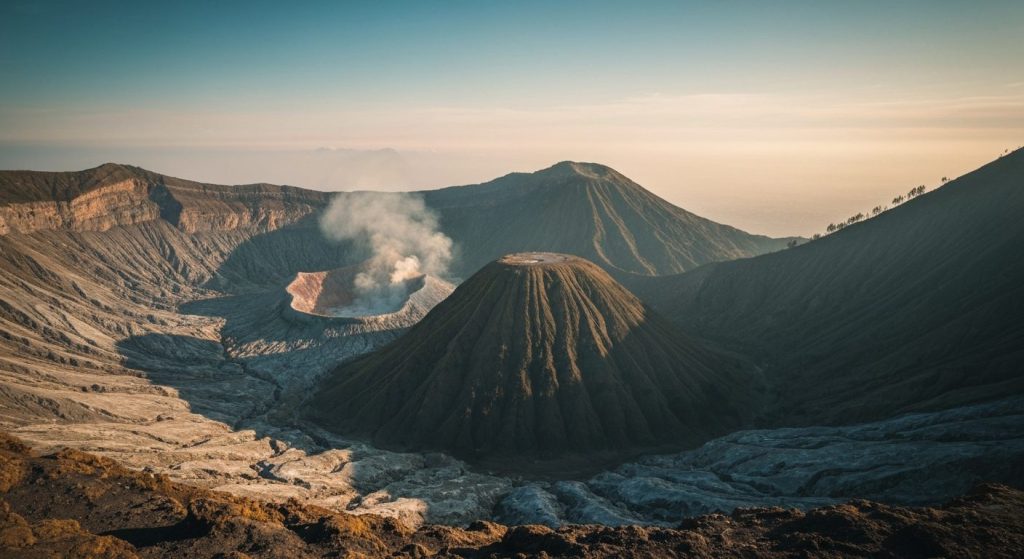
An **Ijen Bromo Tumpak Sewu tour** from Bali is the definitive East Java adventure, pairing the mesmerizing Kawah Ijen blue fire with Mount Bromo’s iconic sunrise and the cascading splendor of Tumpak Sewu waterfall. This multi-day overland circuit offers a profound journey into Java’s volcanic heartland, expertly orchestrated from start to finish by our team at Bali Premium Trip.
We know you want to make the most of your time in Indonesia, and combining these three natural wonders into one seamless **multi day Ijen Bromo Tumpak Sewu tour** is the smartest way to do it. You’ll swap Bali’s beaches for Java’s dramatic landscapes, all without the hassle of arranging individual transfers, permits, and guides. We handle everything from your pick-up in Bali to your return, ensuring a smooth, accountable experience with our own Bali Premium Trip team working directly with vetted local partners on the ground.
## Why Choose Bali Premium Trip for Your East Java Adventure?
When you plan your **Ijen Tumpak Sewu Bromo package** with us, you’re booking directly with the Bali-side specialists. We don’t just sell tours; we operate them. Our commitment means one accountable team manages your entire journey, from the moment you leave Bali’s shores until your return. This direct approach translates to transparent pricing, consistent service quality, and a dedicated team available to you throughout your trip.
We believe in honest, trail-tested advice, not fabricated promises. Our guides are licensed, experienced, and deeply familiar with the terrain and the local communities. We arrange all necessary permits, private vehicle transfers, and carefully selected accommodation, ensuring that while the adventure is raw and authentic, your logistics are polished. When you book your **Ijen Bromo Tumpak Sewu tour from Bali** with us, you’re choosing peace of mind and genuine expertise.
## The East Java Icons: A Closer Look
East Java is a land of raw, untamed beauty. Our flagship **Ijen Tumpak Sewu Bromo 3 day tour Bali** (or the extended 4-day option) brings you face-to-face with its most captivating geological marvels.
### Kawah Ijen: Blue Fire and the World’s Largest Acidic Lake
Kawah Ijen is, without question, one of the most surreal natural phenomena on Earth. As the Photography & Night-Sky Field Editor for Ijen Tour From Bali, I’ve spent countless nights and early mornings on its slopes, capturing its magic.
The trek to Kawah Ijen begins in the dead of night, typically around 2 AM. From the Paltuding ranger post, it’s a 3.5-kilometer uphill hike to the crater rim. The path is well-trodden but steep in places, gaining about 400 meters in elevation.
Once at the rim, the optional descent into the crater to witness the blue fire is a challenging, unofficial route. It’s a steep, rocky scramble down about 800 meters. This part requires a local guide, a proper gas mask (which we provide), and a helmet. Safety is paramount. The blue flames, ignited by sulfuric gas combusting upon contact with air at temperatures up to 600°C, are truly otherworldly. They dance and flicker against the dark, pre-dawn sky, a sight you won’t forget. This phenomenon is best viewed between 2 AM and 4 AM, before the first hints of sunrise dilute the darkness.
As dawn breaks, Kawah Ijen transforms. The blue flames fade, revealing the immense, turquoise crater lake. This is the world’s largest highly acidic lake, stretching approximately 900 meters across. Its color is a striking result of its extreme acidity (pH typically less than 0.5) and high concentration of dissolved minerals. The steam rising from the lake, often tinged yellow by sulfur, adds to the dramatic landscape. You’ll also see the resilient sulfur miners at work, a sobering and powerful sight.
**Bayu’s Photography Tips for Kawah Ijen:**
* **Blue Fire:** This is near-total darkness. You’ll need a fast lens (f/2.8 or wider), a sturdy tripod, and manual settings.
* **ISO:** Start at 3200-6400.
* **Aperture:** f/2.8 or as wide as your lens allows.
* **Shutter Speed:** Experiment between 15-30 seconds. Longer exposures will capture more light but can blur the flames if they’re moving quickly.
* **Focus:** Manual focus to infinity, or use your headlamp to illuminate a rock and focus there, then switch to manual.
* **White Balance:** Tungsten or Kelvin (around 3200K) can enhance the blue.
* **Crater Lake at Sunrise:** As the sky lightens, the lake’s color becomes vibrant.
* **Where to Stand:** From the crater rim, positions directly above the lake offer panoramic views. Look for spots where you can frame the lake with the surrounding peaks. The light changes quickly; shoot continuously.
* **Settings:** As light increases, lower your ISO, narrow your aperture (f/8-f/11 for sharpness), and adjust shutter speed accordingly. A graduated neutral density filter can help balance the bright sky and darker lake.
* **Photographing Sulfur Miners Respectfully:** This is crucial. These men perform incredibly difficult and dangerous work.
* **Ask for permission:** Always make eye contact and, if possible, ask for permission before taking a close-up photo. A simple “Permisi?” (Excuse me?) with a polite gesture often works. Many are used to tourists, but respect goes a long way.
* **Maintain distance:** Do not interfere with their work. Keep a respectful distance, especially when they are carrying their heavy loads.
* **Offer a small token (optional):** Some travelers offer cigarettes or a small amount of Rupiah as a gesture of appreciation, but this should never be transactional for a photo. Do it out of genuine respect.
* **Focus on the environment:** If direct portraits feel intrusive, focus on capturing the scale of their work within the landscape – their silhouettes against the lake, the baskets of sulfur, the tools they use.
* **Consider black and white:** The harsh conditions and the raw effort can be powerfully conveyed in black and white.
### Mount Bromo: A Volcanic Masterpiece at Dawn
From Ijen, your **east java volcano tour bromo ijen package 3d2n** continues to the iconic Mount Bromo. This active volcano, part of the Bromo Tengger Semeru National Park, is famous for its ethereal sunrises and the vast, otherworldly “Sea of Sand” caldera.
The Bromo experience also starts in the dark, with a pre-dawn jeep ride across the volcanic ash desert. These sturdy 4×4 vehicles will navigate the rugged terrain, taking you to a prime viewpoint, typically Penanjakan 1 or Seruni Point. From here, you’ll witness the sunrise painting the sky in fiery hues over the Bromo caldera, with Mount Semeru (Java’s highest peak) often smoking in the distance. The sight of Bromo, Batok, and Semeru emerging from the mist as the sun rises is nothing short of majestic.
After sunrise, the jeep descends into the Sea of Sand, a vast expanse of volcanic ash. You’ll then trek or ride a horse (optional, paid locally) across this lunar landscape to the base of Mount Bromo itself. A final ascent of approximately 250 concrete steps leads you to the crater rim, where you can peer into the smoking caldera. The sulfurous fumes and the deep rumble from within are a powerful reminder of nature’s raw power.
**Bayu’s Photography Tips for Mount Bromo:**
* **Sunrise Viewpoint:**
* **Tripod is essential:** For sharp, low-light shots and long exposures to smooth out clouds.
* **Wide-angle lens:** To capture the vast panorama of the caldera and surrounding peaks.
* **Settings:** Start with ISO 400-800, aperture f/8-f/11 for depth of field. As light increases, adjust shutter speed. Bracket your shots to capture the full dynamic range of the sunrise.
* **Composition:** Look for leading lines in the landscape, frame Bromo between other peaks, and include people for scale.
* **Sea of Sand:**
* **Dust protection:** Your camera and lens will be exposed to fine volcanic ash. Keep a rain cover or plastic bag handy. Change lenses minimally.
* **Telephoto lens:** Useful for compressing the landscape or capturing details of the horses and trekkers.
* **Mid-day shots:** The textures of the sand and the unique light can be striking even outside of sunrise.
* **Crater Rim:**
* **Caution:** Fumes can be strong. Be aware of wind direction.
* **Focus on scale:** The sheer drop into the crater and the tiny figures on the rim make for dramatic compositions.
### Tumpak Sewu Waterfall: The “Niagara of Java”
Concluding your **Ijen Tumpak Sewu combo tour** is the magnificent Tumpak Sewu, often called the “Niagara of Java.” This multi-tiered, curtain-like waterfall is fed by the Semeru volcano, creating hundreds of small streams that plunge dramatically into a lush gorge. It’s a truly spectacular sight, offering both panoramic views from above and an immersive experience from its base.
From the primary viewpoint, you’ll see the full splendor of the falls, a wide curtain of water against a backdrop of verdant cliffs. But the real adventure lies in descending into the canyon to experience Tumpak Sewu from below. This descent is challenging, involving ladders, ropes, and river crossings. It takes approximately 45-60 minutes to reach the base, where you’ll be enveloped by the thunderous roar and mist of the falls. A local guide is essential for this part, ensuring your safety through the slippery and sometimes deep sections. The reward is an unforgettable, humbling experience.
**Bayu’s Photography Tips for Tumpak Sewu:**
* **Viewpoint (from above):**
* **Wide-angle lens:** Essential to capture the immense scale of the falls.
* **Settings:** ISO 100-400, aperture f/8-f/11. Shutter speed can vary.
* **Polarizer:** A circular polarizer can help reduce glare and enhance the colors of the jungle.
* **From the Base:**
* **Water protection:** Your camera *will* get wet. Use a waterproof camera, a waterproof housing, or at minimum, a good rain cover for your DSLR/mirrorless.
* **Tripod:** For long exposures to create silky smooth water effects.
* **Settings for silky water:** ISO 100, aperture f/11-f/16, shutter speed 1-5 seconds (or longer, using an ND filter if needed). Experiment.
* **Composition:** Look for angles that emphasize the height and curtain-like flow. Include people for a sense of scale, but keep your gear protected.
* **Footwear:** Wear sturdy, waterproof sandals or water shoes for the trek to the base; you’ll be wading through water.
## Your Ijen Bromo Tumpak Sewu Itinerary: 3D2N vs. 4D3N
We offer two meticulously crafted options for your **Ijen Bromo Tumpak Sewu tour** from Bali: a compact 3-day, 2-night (3D2N) adventure or a more relaxed 4-day, 3-night (4D3N) journey. Both itineraries depart from Bali via the Ketapang ferry, offering a private, expert-guided experience.
### 3-Day / 2-Night Ijen Bromo Tumpak Sewu Tour Bali (3D2N)
This is our most popular and efficient option, perfect for those with limited time but a strong desire to see East Java’s best. It’s a fast-paced circuit packed with unforgettable moments.
* **Day 1: Bali to Ijen Area (Overnight)**
* **Morning/Noon:** Pick-up from your accommodation in Bali (e.g., Kuta, Seminyak, Ubud, Canggu).
* **Travel:** Private car transfer to Gilimanuk port, ferry crossing to Ketapang, East Java. The ferry journey typically takes about 1 hour.
* **Drive:** Transfer to a guesthouse or hotel near Kawah Ijen (e.g., Banyuwangi area). This drive can take 1-2 hours from Ketapang.
* **Evening:** Dinner and early rest.
* **Day 2: Ijen Blue Fire & Crater, then to Bromo Area (Overnight)**
* **Midnight (approx. 00:00-01:00 AM):** Wake up call, transfer to Paltuding (Ijen trek starting point).
* **Trek:** Hike to Ijen crater rim (3.5 km, ~1.5-2 hours).
* **Blue Fire:** Optional descent into crater (with guide, gas mask) to witness blue flames.
* **Sunrise:** Ascend to rim for sunrise over the turquoise lake.
* **Return:** Trek back to Paltuding, breakfast.
* **Travel:** Long drive (approx. 6-7 hours) to the Mount Bromo area (e.g., Cemoro Lawang or Sukapura).
* **Evening:** Check-in to hotel, dinner, early rest.
* **Day 3: Bromo Sunrise, Tumpak Sewu, then back to Bali/Surabaya/Malang**
* **Early Morning (approx. 02:30-03:00 AM):** Wake up call, transfer by 4×4 jeep to sunrise viewpoint (e.g., Penanjakan 1).
* **Sunrise:** Witness sunrise over Mount Bromo and caldera.
* **Sea of Sand:** Jeep ride across the volcanic sand to Bromo’s base.
* **Crater Hike:** Hike to Bromo crater rim (250 steps).
* **Breakfast:** Return to hotel for breakfast.
* **Travel:** Drive to Tumpak Sewu waterfall (approx. 2-3 hours).
* **Tumpak Sewu:** Explore the waterfall (viewpoint and optional descent to base).
* **Departure:** Transfer directly back to Bali (Gilimanuk ferry, then Bali drop-off, approx. 8-10 hours total from Tumpak Sewu), or to Surabaya/Malang airport/train station (approx. 3-4 hours from Tumpak Sewu).
### 4-Day / 3-Night Ijen Bromo Tumpak Sewu Tour Bali (4D3N)
This option provides a more relaxed pace, reducing travel fatigue and allowing more time to soak in each destination. It’s ideal if you prefer not to rush and want to spend more quality time at each site. This is often chosen as an **Ijen Raung combination** (though Raung itself isn’t trekked, the area allows for easier travel), or for those who simply want a less strenuous schedule.
* **Day 1: Bali to Ijen Area (Overnight)**
* **Morning/Noon:** Pick-up from your accommodation in Bali.
* **Travel:** Private car transfer to Gilimanuk port, ferry crossing to Ketapang, East Java.
* **Drive:** Transfer to a guesthouse or hotel near Kawah Ijen.
* **Evening:** Dinner and early rest.
* **Day 2: Ijen Blue Fire & Crater, then to Lumajang/Malang Area (Overnight)**
* **Midnight (approx. 00:00-01:00 AM):** Wake up call, transfer to Paltuding.
* **Trek & Blue Fire:** Hike to Ijen crater rim, optional blue fire descent.
* **Sunrise:** Witness sunrise over the turquoise lake.
* **Return:** Trek back to Paltuding, breakfast.
* **Travel:** Drive to the Lumajang or Malang area (approx. 4-5 hours), closer to Tumpak Sewu. This breaks up the long drive significantly compared to the 3D2N option.
* **Afternoon:** Relax, explore local surroundings.
* **Evening:** Check-in to hotel, dinner.
* **Day 3: Tumpak Sewu Waterfall, then to Bromo Area (Overnight)**
* **Morning:** After breakfast, transfer to Tumpak Sewu waterfall (approx. 1-2 hours).
* **Tumpak Sewu:** Explore the viewpoint and optional descent to the base, spending ample time here.
* **Travel:** Drive to the Mount Bromo area (e.g., Cemoro Lawang or Sukapura, approx. 2-3 hours).
* **Afternoon/Evening:** Check-in to hotel, dinner, early rest.
* **Day 4: Bromo Sunrise, then back to Bali/Surabaya/Malang**
* **Early Morning (approx. 02:30-03:00 AM):** Wake up call, transfer by 4×4 jeep to sunrise viewpoint.
* **Sunrise:** Witness sunrise over Mount Bromo and caldera.
* **Sea of Sand:** Jeep ride across the volcanic sand to Bromo’s base.
* **Crater Hike:** Hike to Bromo crater rim.
* **Breakfast:** Return to hotel for breakfast.
* **Departure:** Transfer back to Bali (Gilimanuk ferry, then Bali drop-off, approx. 8-10 hours total from Bromo area), or to Surabaya/Malang airport/train station (approx. 3-4 hours from Bromo area).
- Tour Duration
- 3 Days, 2 Nights (3D2N) vs. 4 Days, 3 Nights (4D3N)
- Pacing
- 3D2N: Fast-paced, intense. Ideal for time-constrained travelers.
- 4D3N: More relaxed, less driving per day. Allows for deeper immersion.
- Travel Time Between Sites
- 3D2N: Day 2 includes a very long drive (6-7 hours) from Ijen to Bromo.
- 4D3N: Day 2 drive from Ijen to Lumajang/Malang (4-5 hours) breaks up the journey. Day 3 drive from Tumpak Sewu to Bromo (2-3 hours) is also shorter.
- Blue Fire Opportunity
- Both: Same experience at Kawah Ijen.
- Bromo Sunrise Experience
- Both: Same experience at Mount Bromo.
- Tumpak Sewu Experience
- 3D2N: Explored on the final day, potentially rushed before departure.
- 4D3N: Dedicated time on Day 3, allowing for a more thorough exploration and descent to the base.
- Overnight Stays
- 3D2N: Ijen area (1 night), Bromo area (1 night).
- 4D3N: Ijen area (1 night), Lumajang/Malang area (1 night), Bromo area (1 night).
- Fatigue Level
- 3D2N: Higher due to intense schedule and long drives.
- 4D3N: Lower, with more opportunities for rest.
## What to Expect: The Practicalities of Your Journey
Embarking on an **Ijen Tumpak Sewu Bromo package** from Bali is an adventure that requires some preparation. Here’s what you can expect regarding logistics, accommodation, and the overall experience.
### Getting There and Around
Your journey begins with a comfortable pick-up from your Bali accommodation. From there, we’ll drive you to Gilimanuk Port in West Bali for the ferry crossing to Ketapang, East Java. This ferry operates 24/7 and typically takes about 1 hour. Once in Java, you’ll be met by our private air-conditioned vehicle and licensed driver, who will be with you throughout the tour. Our local guides will meet you at specific points (like Paltuding for Ijen, and the jeep station for Bromo) to lead the treks. This ensures a seamless, private experience from Bali to the rim and back. We arrange all these transfers and local services directly with our vetted partners.
### Accommodation
Accommodation on these tours ranges from basic but clean guesthouses to comfortable hotels, depending on your package choice. Near Ijen, options are typically modest but perfectly adequate for a short overnight stay before the early morning trek. In the Bromo area, you’ll find guesthouses and hotels varying in standard, generally offering comfortable beds and hot water. While not “luxury,” they provide a much-needed rest after a day of exploration. We prioritize locations that are convenient for early starts.
### Food
Most packages include daily breakfast. You’ll have opportunities to purchase lunch and dinner at local restaurants along the route. Indonesian food is diverse and delicious, with many affordable options. Think nasi goreng (fried rice), mie goreng (fried noodles), sate (skewers), and various curries. Our drivers can recommend good, clean local eateries.
### Guides and Permits
Your safety and experience are our top priorities. For the challenging treks at Ijen (especially the blue fire descent) and Tumpak Sewu (descent to the base), experienced local guides are essential. These guides are licensed, knowledgeable about the terrain, and invaluable for navigating these unique environments. We arrange all necessary park entrance fees and permits for Kawah Ijen, Bromo Tengger Semeru National Park, and Tumpak Sewu Waterfall. You won’t need to worry about any of these logistics on the ground.
## Best Time to Visit for Blue Fire and Clear Skies
The best time to undertake an **Ijen Bromo Tumpak Sewu tour** is during the dry season, which typically runs from **May to October**.
* **Blue Fire Visibility:** During the dry season, skies are generally clearer, and rainfall is minimal. This significantly increases the chances of witnessing the Kawah Ijen blue fire in its full glory, as heavy rain or fog can obscure visibility.
* **Trekking Conditions:** Trails at Ijen, Bromo, and Tumpak Sewu are less muddy and slippery during the dry season, making for safer and more comfortable trekking.
* **Views:** Clearer skies mean unobstructed panoramic views from Bromo’s sunrise viewpoints and Tumpak Sewu’s viewpoints.
* **Crowds:** While the dry season is peak tourist season, we plan our timings to minimize large crowds where possible, especially for the early morning starts.
The shoulder months of April and November can also be good, but you run a slightly higher risk of encountering rain. The wet season (November to March) can bring heavy downpours, making treks more challenging and potentially impacting visibility, especially for the blue fire.
## Fitness & Difficulty: Is This Trip for You?
This **east java volcano tour bromo ijen package** is an active adventure. While exhilarating, it does require a reasonable level of physical fitness.
* **Kawah Ijen Trek (Moderate to Difficult):**
* **Distance:** Approximately 3.5 km each way from Paltuding to the crater rim.
* **Elevation Gain:** Around 400 meters. The path is well-maintained but steep in sections.
* **Blue Fire Descent (Difficult):** The optional descent into the crater is a steep, rocky, and uneven scramble. It requires good balance, agility, and a head for heights. This part is not suitable for everyone, especially those with mobility issues or respiratory problems. A gas mask is mandatory due to sulfur fumes.
* **Mount Bromo Trek (Easy to Moderate):**
* **Jeep Ride:** The initial journey across the Sea of Sand is done by 4×4 jeep.
* **Hike to Crater Rim:** From the jeep drop-off, it’s a relatively easy 1.5 km walk across the sand to the base of Bromo, followed by approximately 250 concrete steps to the crater rim. The steps are steep but manageable for most.
* **Fumes:** Sulfur fumes from the crater can be strong.
* **Tumpak Sewu Waterfall (Moderate to Difficult):**
* **Viewpoint (Easy):** The upper viewpoint is easily accessible.
* **Descent to Base (Difficult):** This is the most challenging part of the Tumpak Sewu experience.