Rim Only
Ijen Sunrise & Crater Rim Tour from Bali — Turquoise Acid Lake at Dawn
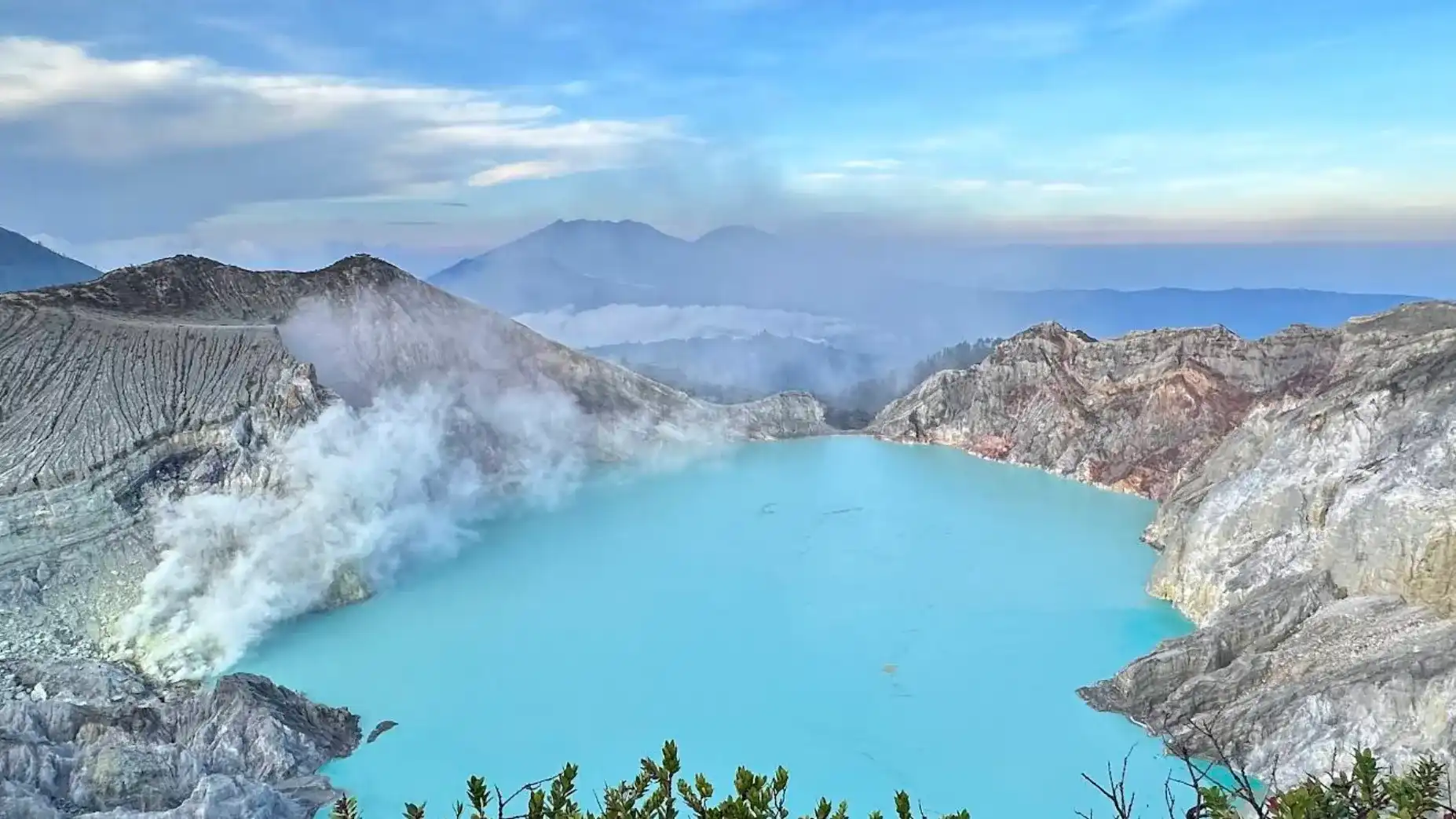
A journey to witness one of Indonesia’s most captivating natural wonders: the Kawah Ijen crater at dawn. Your candid guide to the spectacular sunrise over Ijen’s turquoise acid lake, framed by sulfur plumes and the resilient miners who call this place their workplace.
Blue Fire or Sunrise?
Many visitors dream of seeing Ijen’s legendary blue flames. It’s an incredible sight, no doubt. But for some, the midnight hike to the crater floor might be too challenging, or the allure of seeing the world’s largest turquoise acid lake bathed in the golden light of dawn is simply more appealing.
Honest Comparison
Ijen Blue Fire vs. Sunrise: Which Experience is Right for You?
| Aspect | Blue Fire Descent (Midnight Hike) | Sunrise & Crater Rim |
|---|---|---|
| Timing | Requires starting the hike around 1 AM from Paltuding; you descend into the crater around 2-3 AM. | A slightly later start, arriving on the rim for first light. |
| Visibility | Blue flames are only visible in near-total darkness, typically between 2 AM and 4 AM. After 4 AM the rising light diminishes them. | The lake colour emerges from about 05:00 and strengthens as the sun climbs. |
| Difficulty | More challenging. The descent into the crater is steep, rocky, and often slippery. Requires good fitness, strong knees and careful footing. | Moderately difficult: a wide, well-worn path, steeper in sections toward the end. |
| Gas exposure | Gas masks essential — sulfur gas concentrations are stronger at the bottom. | Masks carried and worn if the wind shifts; exposure is much lower on the rim. |
| Who it suits | Fit hikers set on seeing the flames up close. | Families, photographers of the lake, and anyone with knee, heart or breathing concerns. |
Our itineraries can also be planned so you reach the crater area while it is still dark enough to see the blue fire, then stay through dawn for the lake. Tell us which matters more and we build the night around it.
Your Journey
From Bali: The Ketapang Ferry and Beyond
Beginning your Ijen adventure from Bali means an overnight journey, primarily involving a ferry crossing. We specialise in seamless, private transfers from your accommodation in Bali all the way to Ijen and back.
-
18:00 – 21:00
Pickup from South Bali
Your private driver picks you up from your hotel in South Bali (Seminyak, Canggu, Ubud, Sanur) late in the evening, depending on your exact location and the tour option you have chosen.
-
3 – 5 hours
Drive to Gilimanuk Port
Located on Bali’s western tip. A comfortable ride in an air-conditioned vehicle.
-
45 – 60 minutes
Ferry to Ketapang
On arrival at Gilimanuk, your driver assists you with tickets and boarding the public ferry to Ketapang Port in Banyuwangi, East Java. Boarding and disembarking add to the total time. These ferries operate 24/7.
-
1.5 – 2 hours
Transfer to the Paltuding Ranger Post
Once you disembark at Ketapang, your driver takes you directly to Paltuding, the starting point for the Ijen hike, winding through plantations and small villages.
-
1.5 – 2 hours
The Climb to the Crater Rim
Approximately 3 kilometres one-way with an elevation gain of around 400 metres. The first 1.5 km is the steepest part, a consistent uphill climb; the second 1.5 km levels out somewhat before the final push to the rim. Our licensed local guides set a comfortable pace with time for breaks.
-
05:00 – 05:30
Blue Hour on the Rim
Position yourself before the light arrives. The main viewpoint near the "Welcome to Ijen" sign offers a wide, unobstructed view of the entire lake and the sulfur activity.
-
05:30 – 06:00
Sunrise Over the Turquoise Lake
The sunrise directly behind the opposite rim often creates beautiful sunbursts. Walk a little further along the rim to the left for less crowded areas and cleaner shots of the lake.
-
Mid-morning
Descend, Then Return to Bali
Back down to Paltuding, breakfast, then the drive to Ketapang, the ferry, and your transfer home.
Don’t just face the sunrise. Turn around — the light illuminating the landscape behind you, the caldera walls, and the path you just hiked can be equally beautiful and often less photographed.
Photography
Where to Stand on the Rim at Sunrise
The best viewpoint depends on what you want to capture. The crater rim offers a long stretch — these are the spots we use.
The Main Viewpoint
Near the "Welcome to Ijen" sign. The most popular spot, offering a wide, unobstructed view of the entire lake and the sulfur activity. It gets crowded, so arrive early if you want a prime spot. The sunrise directly behind the opposite rim often creates beautiful sunbursts.
Easy accessFurther Along the Rim
Walk a bit further to the left, facing the lake, away from the blue fire descent path, and you’ll find slightly less crowded areas. The perspective is still excellent, and you might get a cleaner shot of the lake without as many people in your frame. Great for wider panoramas.
Fewer peopleThe Blue Fire Descent Path, From Above
Even if you don’t descend, standing at the top of the descent path just before sunrise offers a dramatic view looking down into the crater. You might catch lingering smoke plumes or even faint blue flames if you’re early enough, along with the full sweep of the lake.
Mind the hikers coming upPre-Sunrise / Blue Hour Settings
A tripod is non-negotiable for sharp images in low light. Start at ISO 400-800 and adjust higher if needed, but try to keep it below 1600 to minimise noise. In very low light, exposures of 1-5 seconds or longer are normal — use your camera’s light meter or take test shots.
ISO 400–800 · f/8–f/11 · 1–5 sTurn Around
Don’t just face the sunrise. The light illuminating the landscape behind you, the caldera walls, and the path you just hiked can be equally beautiful and often less photographed.
Pro tipPhotographing the miners requires sensitivity and respect: always ask permission before a close-up, maintain distance and never obstruct their path, and focus on the context of their labour rather than only their faces.
Essentials
What to Wear: Essentials for Comfort and Safety
Being prepared for Ijen’s conditions is crucial. This is the checklist we send every guest.
Warm Layers
Absolutely essential. It’s freezing on the mountain before sunrise. Thermal base layers, a fleece jacket, a windproof and waterproof outer shell. A warm hat, gloves and a scarf are non-negotiable — we usually wear three to four layers.
Sturdy Hiking Shoes
The trail can be uneven, rocky and slippery, especially if it has rained. Good ankle support is a major plus. Leave your sandals and fashion sneakers at the hotel.
Comfortable Hiking Pants
Avoid jeans, which can be restrictive and uncomfortable when wet or cold.
Headlamp / Flashlight
The trail is unlit. While your guide will have one, it’s always good to have your own. We provide these as part of your tour package.
Gas Mask
Provided by us. Do not attempt the hike without one. Your guide will instruct you on proper use.
Water & Snacks
You will be exerting yourself in cold, thin air.
We provide well-maintained gas masks and headlamps, and your guide gives a thorough safety briefing before the hike covering trail etiquette, emergency procedures, and how to use your gas mask effectively.
Indicative Pricing
Ijen Sunrise Crater Rim Tour Price & Inclusions
The price varies depending on the number of participants, your starting location in Bali, and specific inclusions. As a private tour specialist, we customise each trip.
Private · 2 People
Sunrise & Crater Rim from South Bali
US$250–450 per person
For a private tour from South Bali (for example Seminyak or Canggu) for 2 people. Last verified June 2026.
- Private, air-conditioned vehicle from your Bali accommodation to Gilimanuk, across the ferry, and to Paltuding
- Ferry tickets arranged for you
- Licensed local guides who know the Ijen trails
- All necessary Kawah Ijen entry permits
- Gas masks and headlamps
Private · Larger Groups
Groups of Three or More
Lower per person on request
Prices per person decrease significantly with more participants. A solo traveller will pay more per person than a group of four.
- The same private itinerary and inclusions
- Pace set by your group
- Pickups from remote areas of Bali may incur a slightly higher transfer fee
Indicative ranges, last verified June 2026. Factors influencing price: group size and your starting location in Bali.
FAQ
Frequently Asked Questions
How far is Kawah Ijen from Bali?
Can Ijen be done as a day trip from Bali?
What if the weather is bad or the park is closed?
Do I need a high level of fitness for the sunrise hike?
When is the best season to visit?
Keep Exploring
Other Ways to See Kawah Ijen
Ijen + Bromo + Tumpak Sewu
The full East Java circuit, adding the "Niagara of Java" over 3–4 days.
From Banyuwangi, Bondowoso & Surabaya
Every East Java entry point compared, plus the Ketapang ferry gateway.
Ijen Tour Price & Cost
What drives the price up or down, and what every package actually covers.
How to Get from Bali to Ijen
The Ketapang ferry route, travel times and the midnight departure logic.
Ijen Tour from Bali FAQ
Blue fire, cost, safety, season and booking answers in one place.
Blue Fire Night Trek from Bali
The midnight guided hike to the electric-blue flames and the crater lake at dawn.
How to Book
How to Book Your Ijen Adventure
Reach out with your preferred travel dates, the number of people in your group, and your hotel location in Bali. Our team will promptly provide a detailed itinerary and a transparent price quote, then send you all the pre-trip information and a packing list.
We’ve been operating out of Kuta, Bali, since 2015, building a reputation for honest, reliable and well-organized tours.