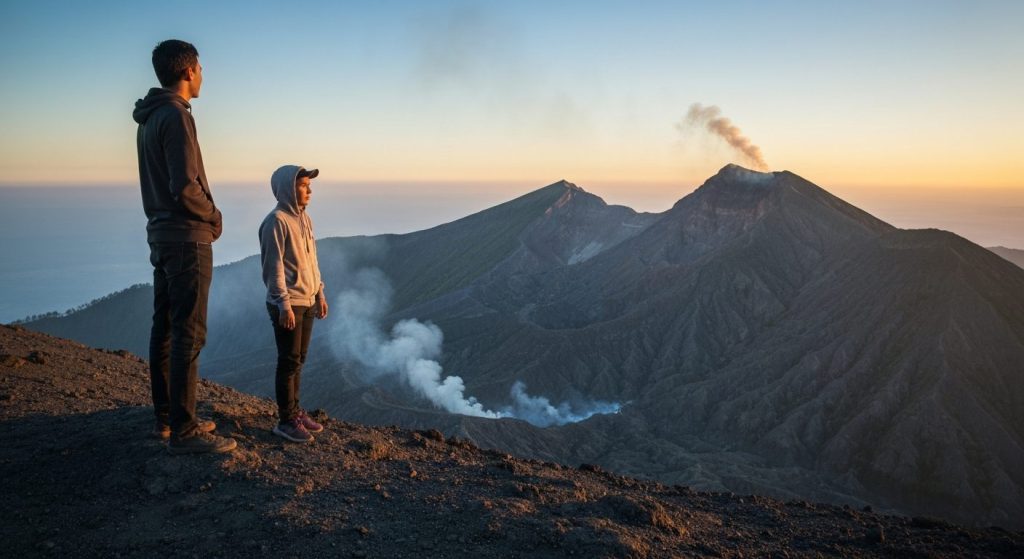
An ijen blue fire photography tour is a night hike to Kawah Ijen engineered around your camera: timed for the blue flames, crater-rim sunrise and sulfur miners, with guides who know the best angles. This page lays out exactly how we, Bali Premium Trip, run a private Ijen blue fire & crater photography tour from Bali or Banyuwangi so you can decide if it fits your level, gear and schedule.
Ijen Blue Fire & Crater Photography Tour — What This Trip Actually Is
This is not just “joining an Ijen hike and hoping for a few snaps”. It’s a guided ijen blue fire night photography tour where:
- Departure time from Bali is set backward from moonset, ferry windows and your preferred blue-fire shooting window.
- Your guide positions you at ijen blue fire best viewpoint photography locations, not just “where the crowd stops”.
- The pace on the trail leaves time to set up tripods, adjust settings and try multiple compositions.
- You have clear guidance on ijen blue fire camera settings and gas-mask logistics long before you smell sulfur.
We design this like a short, intense photography assignment. Night flames in the dark. Turquoise water at first light. Working miners as the sun hits the rim.
Key Facts at a Glance
- Tour type
- Private Ijen photography tour from Bali or Banyuwangi (no mixed open-trip groups)
- Typical duration
- 1 night from Banyuwangi, or 2–3 days from Bali including transfers
- Hike distance & elevation
- ~3 km up from the trailhead to crater rim (~600 m elevation gain), plus optional ~700–800 m descent into the crater
- Photography focus
- Blue fire long exposure, crater lake sunrise, sulfur miners portrait and work scenes
- Indicative price range
- Usually around US$150–260 per person ex-Banyuwangi, or US$240–420 per person from Bali for private trips (last verified June 2026; varies by season, group size and hotel class)
- Group size
- Private: typically 1–8 photographers per vehicle/guide
- Best months
- Generally May–October for clearer skies; tours run year-round subject to volcano authority advisories
Who This Ijen Photography Tour Is For (and Not For)
Designed For:
- Photographers who want the ijen crater lake photography tour built around light and angles, not only “sunrise at the top”.
- Travelers who are okay with a tough midnight hike if the payoff is gallery-grade images.
- Couples or small groups who prefer a private ijen photography tour from Bali, not a 25-person bus share.
- Crew shooting editorial, documentary or brand content within park rules.
Not Ideal For:
- Anyone with serious heart, lung or mobility issues. Sulfur gas and a sustained climb are non‑negotiable.
- Travelers who hate night starts. The most productive frames happen between roughly 01:30 and 06:30.
- Visitors who want guaranteed blue fire. No operator can promise this; it depends on gas, wind and ranger access on the night.
If you’re unsure where you fit, send us a quick message via plan your trip and we can talk it through on WhatsApp — fitness, recent conditions, and timing that matches your camera goals.
From Bali or From Banyuwangi? How the Logistics Work
Bali Premium Trip is based on the Bali side. We’ve done the Bali–Ijen–Bali run in both dry and rainy seasons, so our timing is based on real drives and real ferry queues, not theory.
Option 1 — Private Ijen Photography Tour from Bali
This is the most requested style for first‑time visitors staying in South Bali or Ubud who want a single accountable team from villa pickup to crater rim.
- Pickup areas: Seminyak, Canggu, Kuta, Jimbaran, Sanur, Nusa Dua, Uluwatu, Ubud (other areas on request).
- Drive to Gilimanuk port: About 3.5–5 hours depending on traffic and starting point.
- Ferry to Java: Public RoRo ferry (~1 hour crossing, plus waiting and docking time).
- Drive to Paltuding (Ijen trailhead): Usually ~1.5–2 hours from Ketapang ferry port near Banyuwangi.
Because the blue fire is visible only in darkness, we reverse the whole schedule from your best shooting window:
- Typical Bali pickup for same‑night hike: between 17:00–19:00, depending on your Bali location and current ferry traffic patterns.
- Alternative with hotel: Afternoon transfer Bali → Banyuwangi hotel, sleep early, then start the hike around midnight feeling fresher.
From Bali, private photography‑focused trips with hotel and all transfers often land in the US$240–420 per person range for 2 days/1 night, last checked June 2026, with costs affected by group size and hotel category.
Option 2 — Ex‑Banyuwangi Ijen Photography Tour
If you make your own way to Banyuwangi (by train, flight or overland), we can run a shorter package starting directly from your Banyuwangi hotel:
- Evening briefing about gear, access status and target angles.
- Pickup around 23:30–00:30 depending on your location and park gate time.
- Drive ~1.5 hours to Paltuding trailhead.
- Start hiking typically between 01:00–02:00 for blue fire, subject to ranger advice.
Photography‑oriented night tours from Banyuwangi usually fall in the US$150–260 per person indicative range, last verified June 2026, depending on inclusions (private car, hotel, extra sunrise viewpoints, etc.).
Banyuwangi vs. Bondowoso
Banyuwangi is closer to the trailhead and the ferries. Bondowoso works better if you’re linking an east‑Java road trip, but drive times to Ijen are significantly longer. For pure photography, especially if starting from Bali, we generally recommend the Banyuwangi side to maximize sleep and shooting time.
Sample Photographer-Focused Itinerary
Here’s a concrete example of how a private ijen photography tour from Bali often runs if you choose 2 days/1 night with a Banyuwangi hotel.
Day 1 — Bali to Banyuwangi (Rest & Briefing)
- 13:00–15:00 — Pickup from your Bali hotel or villa in a private car.
- Afternoon — Drive across West Bali toward Gilimanuk port. Short rest and early dinner on route.
- Evening — Cross by ferry to Java, then continue by car to your Banyuwangi hotel.
- 21:00–22:00 — Check‑in, final briefing about the hike, tripod strategy and current crater access rules. Sleep as early as you can.
Night 1 / Day 2 — Blue Fire, Crater Lake & Miners
- 23:30–00:30 — Hotel pickup in Banyuwangi.
- ~01:00–01:30 — Arrive at Paltuding. Gear check, gas mask fit, quick snack.
- 01:30–03:00 — Hike the 3 km climb to the crater rim with a guide who keeps an eye on your pace and photo stops.
- 03:00+ — If crater access is cleared by rangers and gas direction is safe, descend with your guide to blue fire viewpoints.
- ~03:30–04:30 — Blue fire photography Ijen session: long exposures of the flames and the miner activity nearby, always adjusting for gas and crowd flow.
- ~04:30–05:00 — Climb back up to the rim before sky brightness washes out the flames entirely.
- 05:00–06:00 — Ijen crater turquoise lake photography from several rim positions as dawn light shifts: wide‑angle landscapes, silhouettes, and layered ridges.
- 06:00–07:00 — Walk along the rim to ijen crater photography best spots for shots of the miners climbing out and carrying baskets, then return toward the trailhead.
- 07:00–08:30 — Hike back down to Paltuding. More portrait opportunities with miners in softer light farther from heavy fumes.
- Morning — Drive back to Banyuwangi hotel for late breakfast, shower and rest.
- Midday — Return transfer to Bali or onward transfer to your next East Java destination (e.g. Bromo) depending on your wider itinerary.
Every hour marker above shifts with season, weather, group pace and especially park‑ranger decisions. Our job is to keep you fully briefed and adjust in real time for the safest, most productive shooting windows.
Blue Fire, Crater Lake, Miners — What You Can (Realistically) Photograph
1. Blue Fire Long Exposure
The blue flames are produced by burning sulfuric gases. On a good night you’ll see bright electric‑blue tongues hugging the rocks, with yellow‑orange flares from active vents.
Strong images usually come from:
- Arriving as early in the access window as rangers allow (often around 02:00–03:00).
- Using a tripod and slow shutter speeds (more on settings below).
- Framing the flames with miners’ headlamps or silhouettes for scale.
Visibility changes minute by minute with gas and wind. There are also nights when rangers close the descent or ask everyone to stay on the rim. On those nights, blue fire is either distant or not visible at all — this is outside any operator’s control, and we’ll always be clear about that.
2. Ijen Crater Lake Photography at Sunrise
Once the sky brightens the blue fire fades, but the crater lake starts to work.
Your guide will lead you to several ijen crater photography best spots along the rim where you can capture:
- Wide panoramic frames of the whole crater, lake and plume.
- Side‑light on the ridges, creating texture and depth.
- Minimalist shots with just rock, water and a single human figure.
The lake’s turquoise color varies with light and cloud cover. Early morning usually brings the strongest color contrast, especially on clearer days in the May–October dry period.
3. Sulfur Miners Photography — Respectfully Done
The miners are not props. They are people working in hazardous conditions.
On this ijen sulfur miners photography tour Bali guests often want:
- Portraits of miners resting with their baskets.
- Action frames of them loading sulfur at the crater, or climbing with full loads.
- Context shots that show the route, the load and the environment.
We strongly encourage an ethical approach:
- Ask permission or let your guide ask in Indonesian before close portraits.
- Offer a small cash tip or buy simple items (snacks, cigarettes) if the miner is happy with posed photos.
- Step out of the way quickly on narrow sections — their work has priority over your shot.
Our guides are used to balancing these interactions so they feel fair and respectful. The goal is genuine, human images, not exploitation.
Camera Gear & Suggested Ijen Blue Fire Camera Settings
What Gear Works Best
You don’t need a cinema rig to shoot Ijen, but some tools make a big difference.
- Camera: DSLR or mirrorless body with good high‑ISO performance. Full‑frame sensors handle the low light best, but APS‑C or Micro Four Thirds can still work well with careful exposure.
- Lenses:
- Fast wide‑angle (e.g. 14–24mm, 16–35mm, 24mm prime) for the flames and crater scenes.
- Mid‑range zoom (e.g. 24–70mm) for miner portraits and compression across the crater.
- Tripod: Absolutely essential for ijen night photography long exposure. Bring something stable but not too heavy — you’ll carry it up 600 m of climb.
- Remote release or 2‑sec timer: To avoid camera shake during long exposures.
- Spare batteries: The cold plus long exposures drain them fast. Two to three spares per body is sensible.
- Headlamp: Ideally with a red mode so you can see your camera without blowing your own night vision or other people’s frames.
Indicative Blue Fire Settings
This will vary by gear and conditions, but as a starting point near the flames:
- Mode: Manual.
- Aperture: f/1.4–f/2.8 for primes, or the widest your zoom allows.
- Shutter: ~2–15 seconds. Shorter if you want more defined flames, longer for a smoother, ghostly effect.
- ISO: 800–3200 as a base range; on older cameras you may have to push it higher.
- White balance: Start around 3500–4000K and adjust to taste in RAW.
- Focus: Manual, pre‑focus on a headlamp or rock edge, then lock.
Our guides are not replacing a photography tutor, but they know the rhythm: carving out a few extra minutes at good vantage points for you to adjust and experiment, instead of pushing straight past.
Settings for Crater Lake and Miners
As light comes up:
- Switch gradually from long exposures to more standard shutter speeds (1/60–1/250) for people.
- Keep ISO down (100–400) once the sun is above the horizon.
- Stop down to f/8–f/11 for sharp landscapes of the crater and ridges.
If you tell us your level in advance, we can plan for either more patient composition time, or a quicker rhythm with broader coverage spots.
Safety, Masks & Fitness — The Honest Version
Gas, Masks and Reality in the Crater
Ijen is an active sulfur mine, not a gentle park stroll.
- Sulfur gas: The fumes can burn your throat and eyes if you’re in the wrong place at the wrong time. The direction and strength change quickly.
- Masks: We arrange proper gas masks or respirators through licensed local partners. They help a lot but they’re not magic. You will still smell sulfur; the goal is to keep exposure within safe limits.
- Goggles: Anti‑fog goggles are strongly recommended for shots near strong fumes.
- Ranger authority: If rangers close access to the crater or part of the rim for safety, we comply immediately. We will not take you into restricted zones for the sake of a “better shot”.
Trail Difficulty & Who Should Join
- Distance: Around 3 km up and the same back down.
- Elevation gain: ~600 m, mostly on a steady grade with some steeper sections.
- Surface: Paved and gravel path for most of the route, with rougher rock and dust if you descend into the crater.
You do not need to be an elite hiker, but you do need:
- Comfort walking uphill for 1.5–2 hours in the dark.
- Basic balance, especially if descending the inner path with a tripod.
- No serious uncontrolled asthma or heart issues; if in doubt, consult your doctor in advance.
Your guide will match the pace to your group. If some of you choose not to descend to the flames, you can stay on the rim with a guide assistant and focus on crater‑wide compositions instead.
Why Book a Photography-Focused Private Tour Instead of a Regular Open Trip?
| Aspect | Standard Open Trip | Bali Premium Trip Photography Tour |
|---|---|---|
| Group size | Larger mixed groups, 10–25+ people | Private, usually 1–8 photographers per guide |
| Pace | Set around average hikers | Set around shooting spots and light, with time for tripods |
| Viewpoint choice | Basic rim stop and brief blue fire visit | Multiple ijen blue fire best viewpoint photography locations and rim angles |
| Gear awareness | Minimal — guides focus on walking only | Guides used to tripods, long exposures and camera breaks |
| Logistics | Separate Bali transfer, ferry and Java arrangements | One accountable team from Bali hotel to rim and back, with our reservations team handling the full chain |
| Flexibility | Fixed schedule, little room for custom angles | Custom timing around moon phase, add‑on stops, or extended rim time |
If your main goal is strong images rather than just “being there”, these differences matter more than they might seem on paper.
What’s Included, What’s Not & Indicative Ijen Photography Package Price
Bali Premium Trip handles your tour directly via our own reservations team. We do not add hidden third‑party markups; you see the full package price before committing, and we arrange on‑ground services via licensed local partners.
Typical Inclusions
- Private, air‑conditioned car transfers (Bali–Gilimanuk–Banyuwangi–Ijen–Banyuwangi–Bali or ex‑Banyuwangi as requested).
- Ferry tickets between Bali and Java on public boats.
- One night of accommodation in Banyuwangi (for Bali‑start trips), in your chosen comfort range.
- Park entrance fees and mandatory local guiding fees as required by the authorities.
- Licensed local mountain guide familiar with photography priorities.
- Gas mask rental via licensed operators.
- Breakfast on the Ijen morning, plus drinking water during the hike.
Common Exclusions
- International and domestic flights or trains to reach Bali/Banyuwangi.
- Travel insurance (highly recommended for this kind of trip).
- Personal hiking/photography gear (camera, tripod, warm clothing, headlamp).
- Tips for guides, drivers and miners (entirely at your discretion).
- Optional add‑on tours to Bromo, Tumpak Sewu or elsewhere in East Java.
Indicative Price Ranges
All figures below are indicative ranges only, last verified June 2026. Final quotes depend on your group size, season and hotel level:
- Ex‑Banyuwangi night photography tour (no hotel): Around US$150–220 per person for 2–4 guests, including private car, guide, masks and park fees.
- Ex‑Banyuwangi with hotel: Around US$170–260 per person for 2–4 guests, adding one night’s accommodation in a mid‑range hotel.
- 2D/1N ex‑Bali with Banyuwangi hotel: Around US$240–420 per person for 2–4 guests, covering Bali transfers, ferry, hotel, Ijen tour and return.
Larger private groups often benefit from per‑person price reductions. Solo photographers can also book, though the per‑person cost is naturally higher because vehicle and guide costs are not shared.
For a precise quote for your dates and group size, please plan your trip and mention “Ijen Photography Tour” in your WhatsApp or email message so it reaches the right person quickly.
From Ijen to Bromo or Tumpak Sewu — Adding More Photography
Many photographers use Ijen as part of a wider East Java route. Common combinations include:
- Ijen → Bromo: Drive from Banyuwangi to the Bromo region after your Ijen morning rest. Best for sunrise crater shots and sea‑of‑sand jeep sequences the following day.
- Ijen → Tumpak Sewu: For waterfall photography with strong vertical compositions. Involves more scrambling; not ideal if you’re exhausted from several nights of volcano shooting already.
- Bali → Ijen → Bromo → Surabaya: A short arc ending with an outbound flight from Surabaya rather than looping back to Bali.
We can help plan the transit legs so you’re not guessing bus timetables with a heavy camera bag at 3 a.m.
How Booking with Bali Premium Trip Works
You deal with one company from first message to final drop‑off.
- Reach out: Use plan your trip and tell us your dates, how many photographers, your level (beginner to pro) and if you’re starting from Bali or Banyuwangi. WhatsApp is often fastest for back‑and‑forth questions.
- We respond: Our reservations team checks current park rules, typical conditions for your dates and ferry timings, then suggests an itinerary and price range that fits.
- Fine‑tune: You confirm if you want more time at Ijen only, or to add Bromo/Tumpak Sewu, and what comfort level you expect from hotels and vehicles.
- Confirm & pay deposit: Once you’re happy with the plan, you pay a deposit by the options we provide, and we lock in cars, guides, permits and accommodation via our licensed local partners.
- Final brief: A few days before your tour, we send a final reminder on pickup time, packing list and any recent changes (for example, updated crater‑access rules).
Any on‑trip issues — ferry delays, weather shifts, health questions — are coordinated by us. You’re not left to negotiate with several unrelated vendors in the middle of the night.
FAQs — Ijen Blue Fire & Photography
Is the blue fire guaranteed on this tour?
No. The blue fire depends on gas activity, wind direction and whether rangers allow descent to the crater on the night of your visit. Some nights it’s strong and visible, some nights it’s faint or obscured, and on safety‑closure nights you may not see it at all. We can guarantee planning, guides and timing — not volcanic behavior.
Can I join if I’m a beginner photographer with just a phone?
You’re welcome to join, but this specific tour is designed around tripod‑based low‑light shooting. You’ll still see the crater and miners, but phone cameras struggle with true long exposure blue‑fire shots. If your main aim is the experience rather than technical photography, we can suggest a more general Ijen crater tour instead.
Do you provide cameras or tripods?
No. We arrange logistics, guides, masks and permits, but you bring your own photography equipment. If you share your kit list in advance, we can suggest what to prioritize and what to leave at the hotel to avoid overpacking on the hike.
Is it safe to bring expensive gear near the sulfur?
Plenty of photographers bring pro bodies and lenses without issues, but sulfur gas and fine dust are not friendly to gear. Use lens filters if you wish, keep your camera covered when not shooting, and avoid changing lenses in the thickest fumes. Our guides will help you position yourself where gas exposure — for you and your equipment — is more manageable.
How far in advance should I book an Ijen blue fire night photography tour?
For dry‑season months and if you’re linking Ijen with Bromo or Tumpak Sewu, 4–8 weeks ahead gives us the best chance to secure your preferred dates and hotels. Last‑minute trips are sometimes possible, but options may be limited. The simplest way is to message us via plan your trip with your tentative dates and we’ll tell you honestly what’s feasible.